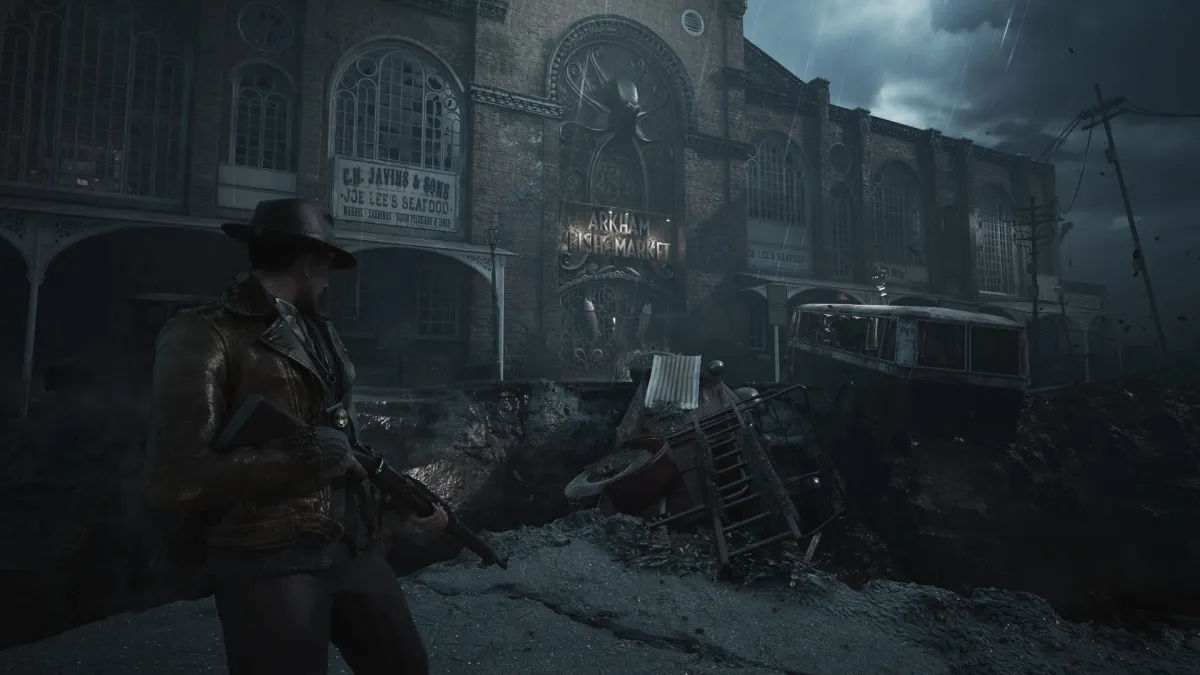




The Sinking City 2 excels at delivering a captivating and eerie atmosphere, artistically alluring visuals, and fantastically creepy sound design. However, much like the shambling reanimated corpses players confront, it tends to stumble as it walks the same well-paved road laid by Resident Evil 4. This long-awaited sequel aligns with its predecessor’s reception; a respectable scare fest with entertaining puzzle-solving, but middling combat, flawed progression, and an underwhelming narrative hold it back from reaching the horrific heights of its more celebrated contemporaries.
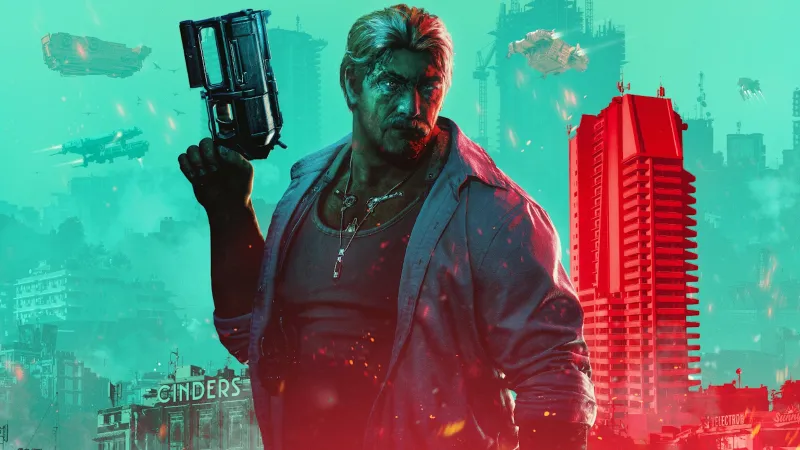
Despite the number 2 in its title, this follow-up to 2019’s The Sinking City is a standalone story starring a new protagonist (though he is aesthetically identical to former lead, Charles Reed), making it a newcomer-friendly adventure. Calvin Rafferty is an adventurer trying to revive Faye, his lover and a university professor, who has fallen into a supernatural sleep. Early events separate Faye’s soul from her physical form, allowing her to accompany Calvin literally in spirit as the duo tag-teams the horrors lurking in the flooded city of Arkham to retrieve her stolen body from the clutches of a Lovecraftian cosmic horror.
Despite solid performances for both leads, their characters never develop much beyond the fact that they really love each other (as Calvin constantly reminds the player), making Calvin himself an uninteresting lead beyond his love life. The intriguing supporting cast is similarly underdeveloped; I hoped to spend more time getting to know an unsettling doctor with worms for eyes or a sassy fish-woman who has shackled herself to her office for everyone else’s sake (her ominous words). This lack of substantial character development makes the overall plot, while a decent mystery, tough to fully invest in. The story also feels rushed, with its final act abruptly arriving sooner than the story’s methodical pacing led me to expect.
The Sinking City 2’s flooded Arkham boasts a killer atmosphere and art direction that makes it tough to look away from even its most grotesque sights. When I wasn’t admiring the sights while cruising Arkham’s flooded streets aboard a motorboat or trudging through my two favorite locations, a hospital and a fish market, I blasted enemies in over-the-shoulder gunplay that reads from Resident Evil’s familiar playbook. Although combat is competent, firing weapons doesn’t pack as much punch as I’d like, even with powerful guns like the shotgun and rifle. The same is true of exploding gas canisters, which don’t feel satisfying to ignite due to the disappointing explosion effect and blast radius. Despite bolstering weapon effectiveness by equipping collectible attachments, the damage upgrades feel negligible as enemies are annoyingly bullet-spongy, even when you target their bulbous, glowing weak points.
Tetris-esque inventory management, a regularly updating map, and resource crafting are all present and well-replicated, but one element I wish The Sinking City 2 borrowed from Resident Evil is the ability to perform a quick 360-degree turn. Calvin moves comparatively slower and more deliberately than his sometimes quicker, at times nimble adversaries who have a habit of striking from behind, occasionally to a cheap extent. The Sinking City 2 often surrounds players with multiple enemies, at times in confined spaces, and between dodging foes who spit deadly goo with the accuracy of a Tom Brady pass and annoying leaping, spider-like critters, encounters are often a fight for breathing room since you spend so much time manually turning around to keep targets in your sights since you’re getting flanked so often. Arkham may be flooded, but the enemy pool is disappointingly shallow; the small handful of creature types means combat encounters become overly familiar by the halfway point of this roughly 13-hour journey.
Thankfully, the locations and level design do a better job of switching things up. You’ll go from piloting a speedboat to derelict locations in the submerged open city hub to sinking your teeth into unraveling the labyrinthine hospital and fish market. The latter locations best scratched my survival-horror itch as I engaged in the well-worn but still entertaining exercise of finding keys to unlock doors, trinkets to solve puzzles, and clues to stitch together solutions on an investigation board. Puzzle-solving as a whole is more consistently enjoyable thanks to its balanced-yet-stimulating challenge and variety, and I was always excited to encounter a new riddle to unravel. I also enjoyed reading the fascinating lore notes and listening to a radio DJ share bizarre Twilight Zone-esque tales of this world.
Solving puzzles, among other feats, rewards Dream Essence, but the progression system is bafflingly steep. You can either spend a couple of these points to earn a single perk such as damage reduction or faster reloading, or spend 10 points to unlock one of three slots to hold said upgrades. I opted to invest in the latter, assuming the large number of locked perks signaled enough Dream Essence is available to unlock a reasonably diverse pool of perks to fit into my three slots. Despite solving most of the optional mysteries and finding many special chests rewarding Dream Essence (among other upgrades like increased inventory slots or weapon attachments), I was barely able to unlock the six perks in the first tier (out of four). This strange scarcity of Dream Essence means you have a choice between unlocking many perks that can only be equipped one at a time or equipping three perks from a minuscule pool. This imbalanced progression severely limits crafting varied builds, something The Sinking City 2 seemingly encourages. Ultimately, however, the perks don’t make much of a difference. I was still able to finish The Sinking City 2 on the standard difficulty without feeling underpowered.
The Sinking City 2 offers a decent take on a familiar formula if you’re itching for survival horror. But with so many better options, it’s hard to recommend it over similar titles that nail the style more consistently and evenly. Though I did find some fun within the madness, its shortcomings keep its potential from fully breaking the surface.