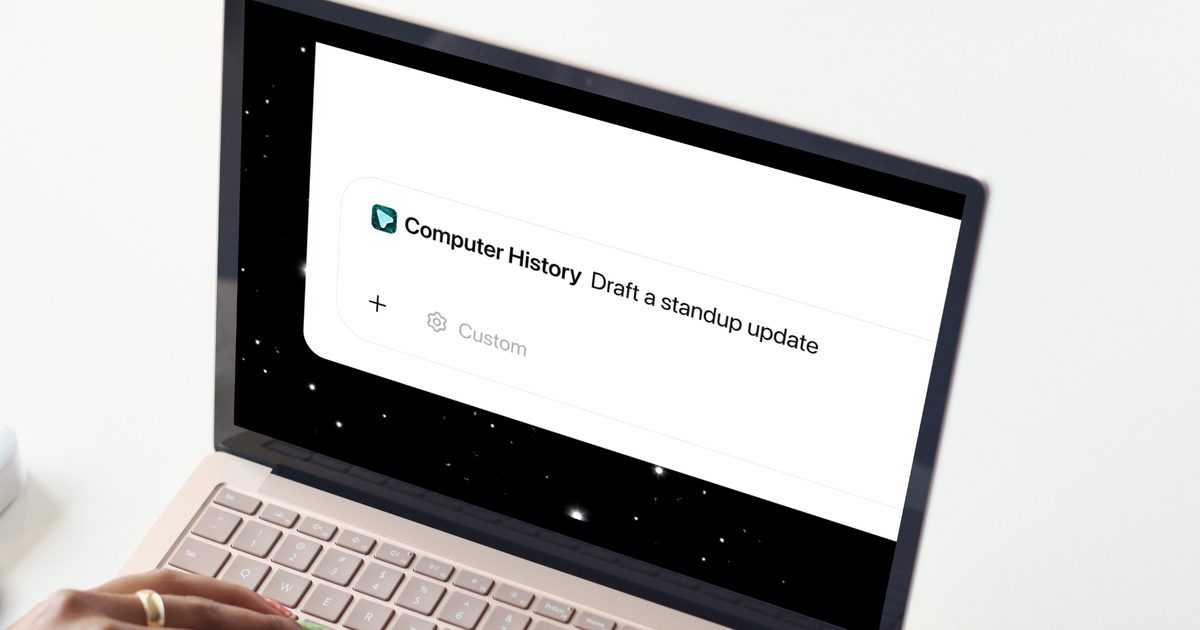






OpenAI is giving ChatGPT a new way to understand how you actually work on your computer. Called Computer History, the feature turns activity across apps and websites into a timeline and memories that ChatGPT and Codex can use later.
The idea is fairly simple: instead of asking ChatGPT to remember something you previously discussed, you can ask it about work you recently did on your Mac. The feature can help you pick up where you left off, understand patterns in how you work, and even turn repetitive workflows into reusable skills or automations.
The rollout began on August 13 and is now rolling out globally to Pro, Business, and Enterprise members. In the next few weeks, users in the European Economic Area, the United Kingdom and Switzerland will get access.
OpenAI announced the debut in a series of X posts, describing Computer History as a development of the Chronicle research preview. The new version uses fewer tokens and provides better privacy protections than the previous preview, the company says.
The computer history becomes a timeline ChatGPT can understand
Computer History records interaction events across apps and websites, rather than continuously capturing what is happening on your screen. OpenAI says it does not capture your screen or audio, which is an important distinction for anyone who is understandably uncomfortable with the idea of an AI watching their desktop.
The feature is also opt-in. Your history only starts being collected after you choose to turn it on, and you can decide which apps and websites contribute to the history. The screenshot says users can also view and pause collection from the macOS menu bar and inspect or delete their history whenever they want.
That gives the feature a useful middle ground. ChatGPT gets enough context to understand what you have been doing without simply recording everything on your screen.
It could make ChatGPT much more useful for repetitive work
The bigger promise is what happens after ChatGPT understands your working patterns. Instead of explaining the same process every time, you could ask it to look at how you previously completed a task and turn those steps into a reusable skill or automation.
The example in the screenshot shows exactly that approach, with ChatGPT suggesting that a user’s launch-update workflow could become a reusable skill. Computer History replaces the earlier Chronicle research preview, but OpenAI describes it as a rebuilt system rather than simply a renamed version. Chronicle relied on screenshots, while Computer History records interaction events instead.
There are also some limitations. The feature is currently described as being off by default for ChatGPT Pro, Business, and Enterprise users in the macOS app, and Business and Enterprise administrators must explicitly grant access before members can enable it. The screenshot also says it is not currently available in the European Economic Area, Switzerland, or the United Kingdom.
The interesting shift here is that ChatGPT is moving from remembering conversations to remembering workflows. And if that works as intended, it could make the computer itself part of the context window.