

Close Menu
Best in TechnologyBest in Technology
  • News
  • Phones
  • Laptops
  • Gadgets
  • Gaming
  • AI
  • Tips
  • More
    • Web Stories
    • Global
    • Press Release

Subscribe to Updates

Get the latest tech news and updates directly to your inbox.

What's On
Why browser-first document tools like Zendocs are replacing installed PDF software

Why browser-first document tools like Zendocs are replacing installed PDF software

3 March 2026
How Use.AI helps users navigate the overwhelming AI tool landscape

How Use.AI helps users navigate the overwhelming AI tool landscape

3 March 2026
L.L.Bean Promo Codes and Deals: Up to 75% Off Outdoor Gear

L.L.Bean Promo Codes and Deals: Up to 75% Off Outdoor Gear

3 March 2026
Facebook X (Twitter) Instagram
Just In
  • Why browser-first document tools like Zendocs are replacing installed PDF software
  • How Use.AI helps users navigate the overwhelming AI tool landscape
  • L.L.Bean Promo Codes and Deals: Up to 75% Off Outdoor Gear
  • That Spotify afterlife speaker urn is a real thing you can buy
  • Corning reveals Gorilla Glass Ceramic 3 to save your phone’s screen from a hellish drop
  • Watch Honor’s first humanoid robot evolve from clumsy prototype to slick dancer
  • This AI Agent Is Ready to Serve, Mid-Phone Call
  • TCL NXTPAPER 70 Pro serves eye-friendly display with stylus support and it’s headed to the US
Facebook X (Twitter) Instagram Pinterest Vimeo
Best in TechnologyBest in Technology
  • News
  • Phones
  • Laptops
  • Gadgets
  • Gaming
  • AI
  • Tips
  • More
    • Web Stories
    • Global
    • Press Release
Subscribe
Best in TechnologyBest in Technology
Home » A Glowing Metal Ring Crashed to Earth. No One Knows Where It Came From
News

A Glowing Metal Ring Crashed to Earth. No One Knows Where It Came From

News RoomBy News Room11 January 20254 Mins Read
Share Facebook Twitter Pinterest LinkedIn Tumblr Reddit Telegram Email
A Glowing Metal Ring Crashed to Earth. No One Knows Where It Came From
Share
Facebook Twitter LinkedIn Pinterest Email

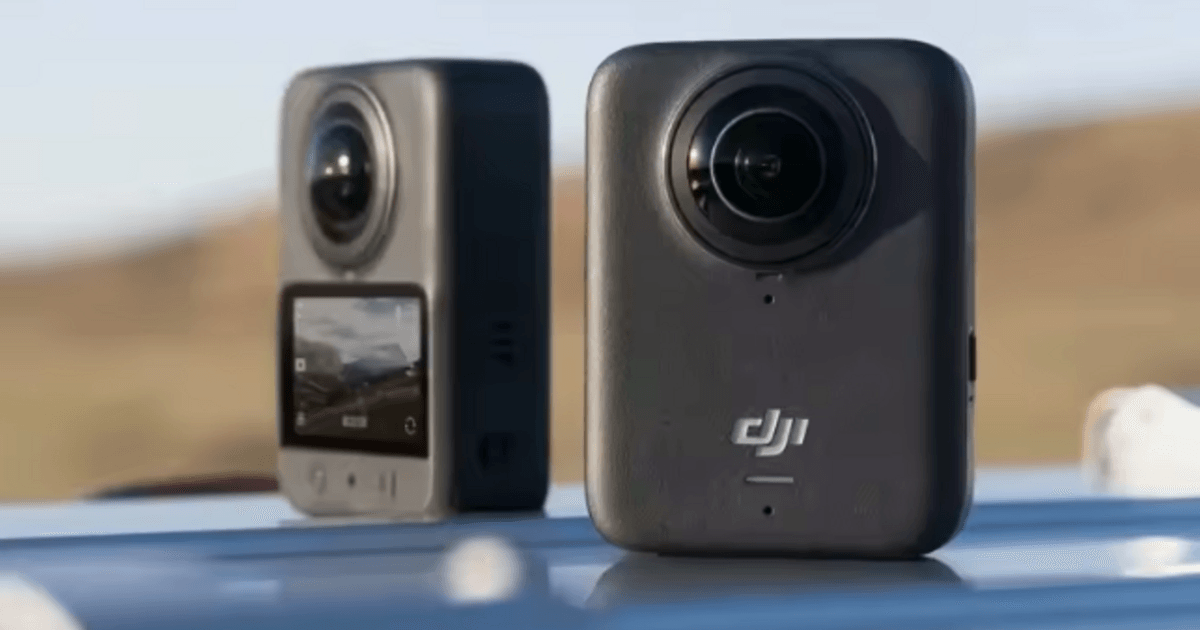
It has been more than a week since reports first emerged about a “glowing ring of metal” that fell from the sky and crashed near a remote village in Kenya.

According to the Kenya Space Agency, the object weighed 1,100 pounds and had a diameter of more than 8 feet when measured after it landed on December 30. A couple of days later, the space agency confidently reported that the object was a piece of space debris, saying it was a ring that separated from a rocket. “Such objects are usually designed to burn up as they reenter the Earth’s atmosphere or to fall over unoccupied areas, such as the oceans,” the space agency told The New York Times.

Since those initial reports were published in Western media, a small band of dedicated space trackers have been using open source data to try to identify precisely which space object fell into Kenya. So far, they have not been able to identify the rocket launch to which the large ring can be attributed.

Now, some space trackers believe the object may not have come from space at all.

Did It Really Come From Space?

Space is increasingly crowded, but large chunks of metal from rockets are generally not flying around in Earth orbit undetected and untracked.

“It was suggested that the ring is space debris, but the evidence is marginal,” wrote Jonathan McDowell, an astrophysicist working at the Harvard-Smithsonian Center for Astrophysics. McDowell is highly regarded for his analysis of space objects. “The most likely space-related possibility is the reentry of the SYLDA adapter from the Ariane V184 flight, object 33155. Nevertheless, I am not fully convinced that the ring is space debris at all,” he wrote.

Another prominent space tracker, Marco Langbroek, believes it’s plausible that the ring came from space, so he investigated further into objects that may have returned around the time of the object’s discovery in Kenya. In a blog post written Wednesday he noted that apart from the metal ring, other fragments looking consistent with space debris—including material that looks like carbon wrap and isolation foil—were found several kilometers away from the ring.

Like McDowell, Langbroek concluded that the most likely source for the object was an Ariane V launch that took place back in July 2008, in which the European rocket lofted two satellites into geosynchronous transfer orbit.

The Ariane V rocket was a rather unique rocket in that it was designed with the capacity to launch two medium-sized satellites into geostationary transfer orbit, a destination much more popular in the late 1990s and early 2000s than it is today. To accommodate both satellites, a SYstème de Lancement Double Ariane (SYLDA) shell was placed over the lower satellite to support the mounting of a second satellite on top of it. During the launch in 2008, this SYLDA shell was ejected into a 1.6-degree inclined geosynchronous transfer orbit, Langbroek said.

Could It Have Come From a European Rocket?

Over the years, this object has been tracked by the US military, which maintains a database of space objects so that active spacecraft can avoid collisions. Due to a lack of tracking stations near the equator, this object is only periodically observed. According to Langbroek, its last observation took place on December 23, when it was in a highly elliptical orbit, reaching a perigee of just 90 miles (146 km) from the Earth. This was a week before an object crashed into Kenya.

Based on his modeling of the possible reentry of the SYLDA shell, Langbroek believes it’s possible that the European object could have landed in Kenya around the time its entry was observed.

However, an anonymous X account using the handle DutchSpace, which despite the anonymity has provided reliable information about Ariane launch vehicles in the past, posted a thread that indicates this ring could not have been part of the SYLDA shell. With images and documentation, it seems clear that neither the diameter nor mass of the SYLDA component matches the ring found in Kenya.

Additionally, Arianespace officials told Le Parisien newspaper on Thursday that they do not believe the space debris was associated with the Ariane V rocket. Essentially, if the ring does not fit, you must acquit.

So what was it?

This story originally appeared on Ars Technica.
Share. Facebook Twitter Pinterest LinkedIn Tumblr Email
Previous ArticleI tried three new VR gadgets that make Quest 3 and 3S even better
Next Article This AI app lets parents look for signs of infant jaundice at home

Related Articles

Why browser-first document tools like Zendocs are replacing installed PDF software
News

Why browser-first document tools like Zendocs are replacing installed PDF software

3 March 2026
How Use.AI helps users navigate the overwhelming AI tool landscape
News

How Use.AI helps users navigate the overwhelming AI tool landscape

3 March 2026
L.L.Bean Promo Codes and Deals: Up to 75% Off Outdoor Gear
News

L.L.Bean Promo Codes and Deals: Up to 75% Off Outdoor Gear

3 March 2026
That Spotify afterlife speaker urn is a real thing you can buy
News

That Spotify afterlife speaker urn is a real thing you can buy

3 March 2026
Corning reveals Gorilla Glass Ceramic 3 to save your phone’s screen from a hellish drop
News

Corning reveals Gorilla Glass Ceramic 3 to save your phone’s screen from a hellish drop

3 March 2026
Watch Honor’s first humanoid robot evolve from clumsy prototype to slick dancer
News

Watch Honor’s first humanoid robot evolve from clumsy prototype to slick dancer

3 March 2026
Demo
Top Articles
5 laptops to buy instead of the M4 MacBook Pro

5 laptops to buy instead of the M4 MacBook Pro

17 November 2024126 Views
ChatGPT o1 vs. o1-mini vs. 4o: Which should you use?

ChatGPT o1 vs. o1-mini vs. 4o: Which should you use?

15 December 2024111 Views
Costco partners with Electric Era to bring back EV charging in the U.S.

Costco partners with Electric Era to bring back EV charging in the U.S.

28 October 202499 Views

Subscribe to Updates

Get the latest tech news and updates directly to your inbox.

Latest News
Watch Honor’s first humanoid robot evolve from clumsy prototype to slick dancer News

Watch Honor’s first humanoid robot evolve from clumsy prototype to slick dancer

News Room3 March 2026
This AI Agent Is Ready to Serve, Mid-Phone Call News

This AI Agent Is Ready to Serve, Mid-Phone Call

News Room3 March 2026
TCL NXTPAPER 70 Pro serves eye-friendly display with stylus support and it’s headed to the US News

TCL NXTPAPER 70 Pro serves eye-friendly display with stylus support and it’s headed to the US

News Room3 March 2026
Most Popular
The Spectacular Burnout of a Solar Panel Salesman

The Spectacular Burnout of a Solar Panel Salesman

13 January 2025137 Views
5 laptops to buy instead of the M4 MacBook Pro

5 laptops to buy instead of the M4 MacBook Pro

17 November 2024126 Views
ChatGPT o1 vs. o1-mini vs. 4o: Which should you use?

ChatGPT o1 vs. o1-mini vs. 4o: Which should you use?

15 December 2024111 Views
Our Picks
That Spotify afterlife speaker urn is a real thing you can buy

That Spotify afterlife speaker urn is a real thing you can buy

3 March 2026
Corning reveals Gorilla Glass Ceramic 3 to save your phone’s screen from a hellish drop

Corning reveals Gorilla Glass Ceramic 3 to save your phone’s screen from a hellish drop

3 March 2026
Watch Honor’s first humanoid robot evolve from clumsy prototype to slick dancer

Watch Honor’s first humanoid robot evolve from clumsy prototype to slick dancer

3 March 2026

Subscribe to Updates

Get the latest tech news and updates directly to your inbox.

Facebook X (Twitter) Instagram Pinterest
  • Privacy Policy
  • Terms of use
  • Advertise
  • Contact Us
© 2026 Best in Technology. All Rights Reserved.

Type above and press Enter to search. Press Esc to cancel.