

Close Menu
Best in TechnologyBest in Technology
  • News
  • Phones
  • Laptops
  • Gadgets
  • Gaming
  • AI
  • Tips
  • More
    • Web Stories
    • Global
    • Press Release

Subscribe to Updates

Get the latest tech news and updates directly to your inbox.

What's On
I tried a smart bracelet as my digital journal and mood calendar. It’s odd, but it works.

I tried a smart bracelet as my digital journal and mood calendar. It’s odd, but it works.

17 August 2026
Sony still hasn’t fixed a launch date for the PS6, and that’s telling

Sony still hasn’t fixed a launch date for the PS6, and that’s telling

17 August 2026
ChatGPT’s Computer History has one big privacy problem

ChatGPT’s Computer History has one big privacy problem

16 August 2026
Facebook X (Twitter) Instagram
Just In
  • I tried a smart bracelet as my digital journal and mood calendar. It’s odd, but it works.
  • Sony still hasn’t fixed a launch date for the PS6, and that’s telling
  • ChatGPT’s Computer History has one big privacy problem
  • Intel may be cooking up a budget Panther Lake chip for gaming handhelds
  • I’d trade the Pixel 11 Pro’s temperature sensor for HiLight every single time
  • Are classroom screens making children less cognitively capable? Experts are divided
  • Your holiday photos could help scammers figure out exactly where you are
  • I tried this Mac music app, and now I wish macOS had it built-in
Facebook X (Twitter) Instagram Pinterest Vimeo
Best in TechnologyBest in Technology
  • News
  • Phones
  • Laptops
  • Gadgets
  • Gaming
  • AI
  • Tips
  • More
    • Web Stories
    • Global
    • Press Release
Subscribe
Best in TechnologyBest in Technology
Home » This new Mac malware won’t let you use your computer until you surrender your password
News

This new Mac malware won’t let you use your computer until you surrender your password

News RoomBy News Room17 July 20264 Mins Read
Share Facebook Twitter Pinterest LinkedIn Tumblr Reddit Telegram Email
This new Mac malware won’t let you use your computer until you surrender your password
Share
Facebook Twitter LinkedIn Pinterest Email

A newly discovered strain of macOS malware is taking social engineering to an unsettling new level. Instead of exploiting a software vulnerability or silently stealing information in the background, it simply refuses to let you use your Mac until you type in your login password.

Dubbed ClickLock, the malware repeatedly shuts down key macOS processes, disables notifications, displays convincing Apple password prompts, and effectively traps users in a loop that only ends when the correct password is entered. Once that happens, it doesn’t just steal the password. It goes after browser data, cryptocurrency wallets, saved credentials, password managers, and much more.

A BleepingComputer reports states researchers at Group-IB say the malware has already infected at least 100 systems across 33 countries since May. Even more worrying, when it was first uploaded to VirusTotal in June, none of the security engines on the platform flagged it as malicious.

ClickLock doesn’t hack your Mac. It hacks you.

Unlike many modern malware campaigns that rely on zero-day exploits or privilege escalation vulnerabilities, ClickLock succeeds through psychological pressure. The infection is believed to begin with a ClickFix-style attack, where users are tricked into copying and pasting a command into Terminal under the guise of completing a Cloudflare “human verification” check. While a fake verification progress bar keeps the victim distracted, the malware quietly downloads its payloads in the background.

At the same time, it disables keyboard interrupts, hides the Terminal cursor, and suppresses macOS Notification Center alerts for nearly six hours, making it much harder for victims to realise something suspicious is happening.

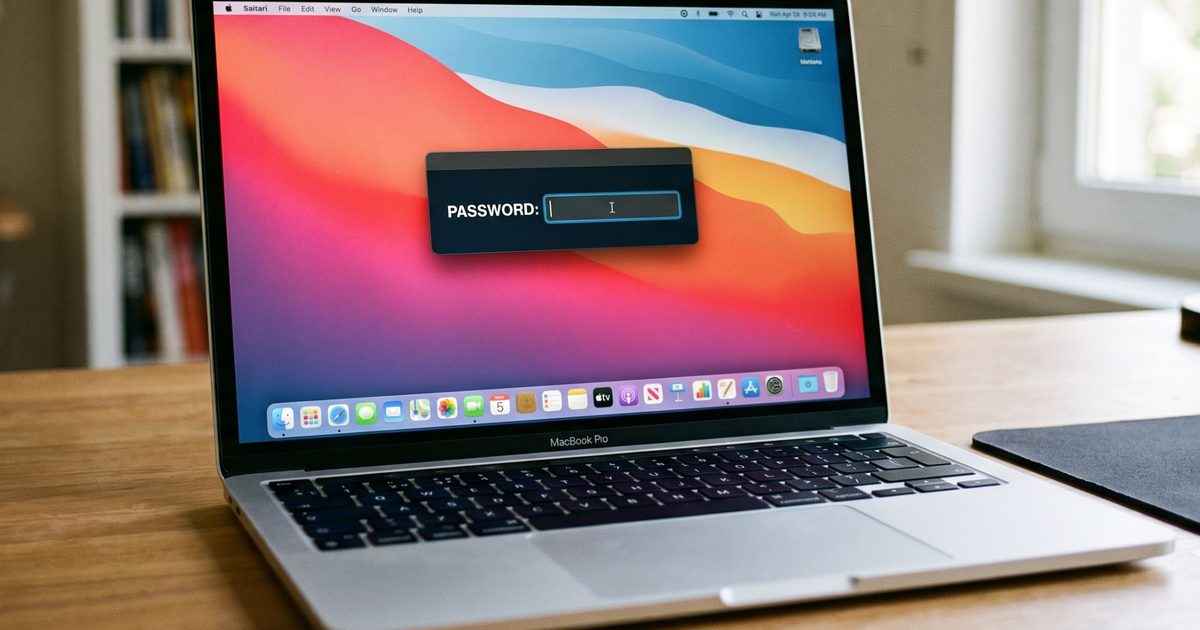
The malware’s most disturbing feature comes next. It displays what appears to be a legitimate macOS password dialog complete with the user’s real account name and Apple branding. If the victim enters the correct system password, ClickLock immediately validates it and sends the credentials to the attackers through Telegram.

If the user refuses, the malware doesn’t give up. Instead, it installs persistence mechanisms that reactivate after the next login. Once triggered, ClickLock begins killing critical macOS processes every 210 milliseconds, including Finder, Dock, Terminal, Activity Monitor, Console, System Settings, Spotlight, and even popular web browsers.

The result is a Mac that appears almost completely unusable, leaving only the password prompt visible on screen. According to Group-IB, this loop can continue for more than 83 hours, or until the victim finally gives in.

It wants far more than your password

The login password is only the beginning. ClickLock also attempts to trick victims into approving a genuine Keychain access prompt that grants permission to Chrome’s Safe Storage key. That key can later be used to decrypt stored passwords, cookies, and autofill information from Chromium-based browsers.

The malware’s data-stealing module casts an exceptionally wide net. It targets browser profiles from Chrome, Firefox, Brave, Microsoft Edge, Opera, Vivaldi, Arc and Chromium, harvesting saved passwords, cookies, bookmarks, browsing sessions, local storage and autofill information.

Cryptocurrency users face an even greater risk. ClickLock searches for browser wallet extensions, desktop wallet files, encrypted wallet vaults and cached wallet addresses across major blockchain ecosystems including Bitcoin, Ethereum-compatible chains, Solana, TRON, TON and Stacks.

Representative Image

It also collects FileZilla FTP configurations, shell history, basic system information and public IP addresses before compressing everything into ZIP archives and uploading the stolen data through the Telegram Bot API. To ensure attackers maintain long-term access, ClickLock deploys a modified version of the open-source GSocket tool, creating a persistent backdoor capable of remotely controlling the infected Mac. Unlike the malware’s other components, which delete themselves after execution to minimise forensic evidence, this backdoor remains active on the system.

The stealth techniques don’t end there. Researchers say the malware is hosted on compromised but otherwise legitimate websites, helping it evade reputation-based security systems. Its payloads also remove themselves after execution, leaving very few traces behind. Despite that, Group-IB says defenders can still spot suspicious behaviour by watching for repeated password dialog boxes generated through osascript, continuous termination of macOS processes, mass access to browser profile folders and unusual outbound connections to Telegram.

The biggest takeaway, however, is surprisingly simple. If a website ever asks you to open Terminal and paste a command to prove you’re human, close the page immediately. No legitimate website, including Cloudflare, requires Terminal access for human verification. And if your Mac suddenly becomes unusable while repeatedly demanding your system password, resist the urge to comply. Instead, force a shutdown using the power button, restart in Safe Mode, and investigate the system before entering any credentials. In ClickLock’s case, your password isn’t solving the problem. It’s exactly what the attackers are waiting for.

Share. Facebook Twitter Pinterest LinkedIn Tumblr Email
Previous ArticleA $10K Bounty Aims to Make Sony’s PlayStation 5 a Computer Again
Next Article Conspiracy Theorists Think Trump’s Speech Paves the Path to the Insurrection Act

Related Articles

I tried a smart bracelet as my digital journal and mood calendar. It’s odd, but it works.
News

I tried a smart bracelet as my digital journal and mood calendar. It’s odd, but it works.

17 August 2026
Sony still hasn’t fixed a launch date for the PS6, and that’s telling
News

Sony still hasn’t fixed a launch date for the PS6, and that’s telling

17 August 2026
ChatGPT’s Computer History has one big privacy problem
News

ChatGPT’s Computer History has one big privacy problem

16 August 2026
Intel may be cooking up a budget Panther Lake chip for gaming handhelds
News

Intel may be cooking up a budget Panther Lake chip for gaming handhelds

16 August 2026
I’d trade the Pixel 11 Pro’s temperature sensor for HiLight every single time
News

I’d trade the Pixel 11 Pro’s temperature sensor for HiLight every single time

16 August 2026
Are classroom screens making children less cognitively capable? Experts are divided
News

Are classroom screens making children less cognitively capable? Experts are divided

16 August 2026
Demo
Top Articles
5 laptops to buy instead of the M4 MacBook Pro

5 laptops to buy instead of the M4 MacBook Pro

17 November 2024133 Views
ChatGPT o1 vs. o1-mini vs. 4o: Which should you use?

ChatGPT o1 vs. o1-mini vs. 4o: Which should you use?

15 December 2024112 Views
Costco partners with Electric Era to bring back EV charging in the U.S.

Costco partners with Electric Era to bring back EV charging in the U.S.

28 October 2024100 Views

Subscribe to Updates

Get the latest tech news and updates directly to your inbox.

Latest News
Are classroom screens making children less cognitively capable? Experts are divided News

Are classroom screens making children less cognitively capable? Experts are divided

News Room16 August 2026
Your holiday photos could help scammers figure out exactly where you are News

Your holiday photos could help scammers figure out exactly where you are

News Room16 August 2026
I tried this Mac music app, and now I wish macOS had it built-in News

I tried this Mac music app, and now I wish macOS had it built-in

News Room16 August 2026
Most Popular
The Spectacular Burnout of a Solar Panel Salesman

The Spectacular Burnout of a Solar Panel Salesman

13 January 2025137 Views
5 laptops to buy instead of the M4 MacBook Pro

5 laptops to buy instead of the M4 MacBook Pro

17 November 2024133 Views
ChatGPT o1 vs. o1-mini vs. 4o: Which should you use?

ChatGPT o1 vs. o1-mini vs. 4o: Which should you use?

15 December 2024112 Views
Our Picks
Intel may be cooking up a budget Panther Lake chip for gaming handhelds

Intel may be cooking up a budget Panther Lake chip for gaming handhelds

16 August 2026
I’d trade the Pixel 11 Pro’s temperature sensor for HiLight every single time

I’d trade the Pixel 11 Pro’s temperature sensor for HiLight every single time

16 August 2026
Are classroom screens making children less cognitively capable? Experts are divided

Are classroom screens making children less cognitively capable? Experts are divided

16 August 2026

Subscribe to Updates

Get the latest tech news and updates directly to your inbox.

Facebook X (Twitter) Instagram Pinterest
  • Privacy Policy
  • Terms of use
  • Advertise
  • Contact Us
© 2026 Best in Technology. All Rights Reserved.

Type above and press Enter to search. Press Esc to cancel.