






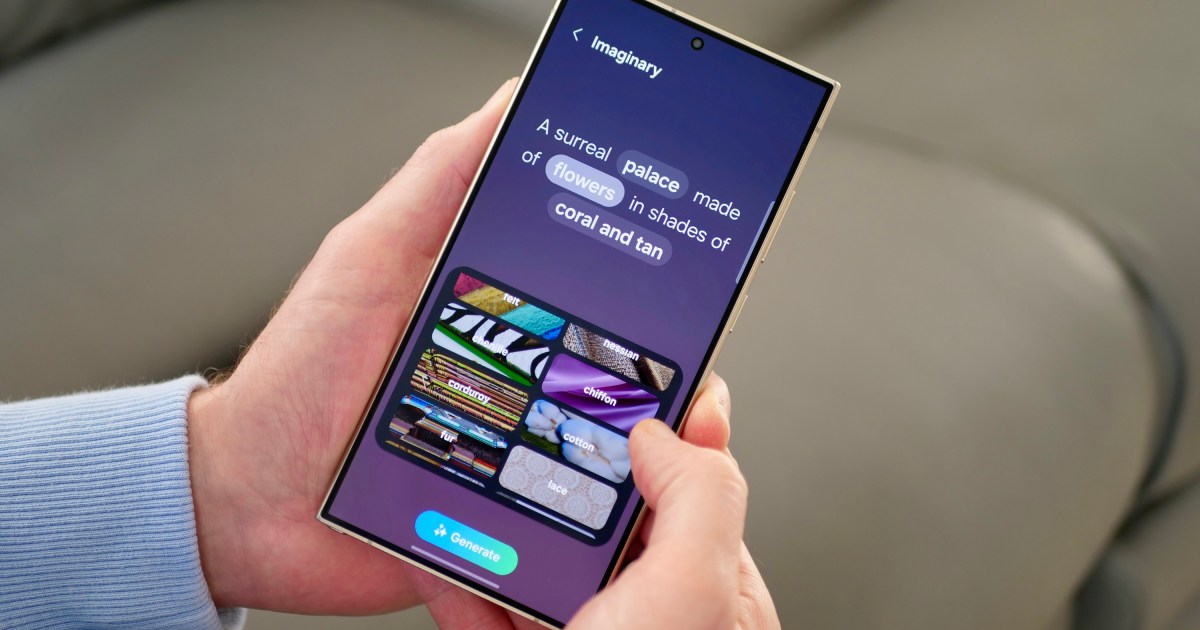
The smartphone industry is in a weird place right now. It’s in a state of flux where we can see all the benefits of generative AI knocking at the doors, but the various brands apparently have conflicting ideas on how to push them on smartphones despite bold promises.
Take, for example, Qualcomm, which introduced the Snapdragon 8 Gen 3 chipset and praised its futuristic generative AI features. The “first mobile platform designed with Generative AI in mind,” said the chipmaker.
The company touted a faster virtual assistant using Meta’s Llama 2 language model, the world’s fastest text-to-image generation courtesy of Stable Diffusion, the ability to manipulate images using AI, and more.
Interestingly, we now have multiple phones powered by the same chipset on the market, yet they don’t seem to offer those perks in the same way that Qualcomm showed off.
We deserve more than just talk
Rival chipmaker MediaTek, which has been on a massive market surge lately, found itself making similar claims.
In fact, it touted AI figures that even eclipsed Qualcomm’s best with the Dimensity 9300 and Dimensity 8300 silicon. Yet, when Digital Trends asked one of the smartphone companies that has started selling a Dimensity 9300-based phone about the absence of these generative AI tricks, it refused to comment.
Digital Trends reached out to Qualcomm and Samsung for insights about the situation, but didn’t get any answers. Notably, Samsung has implemented some neat AI features on the new Galaxy S24 series phones, but they don’t appear to be the same kind or of the disrupting magnitude promised for the underlying chip.
Finbarr Moynihan, MediaTek’s vice president of corporate marketing, sat with Digital Trends for an interview to explore the conundrum. “MediaTek is focused on creating the best silicon possible that is ready for all AI possibilities,” he said, pointing out that the company worked with every stakeholder in the chain to deliver an optimized solution.
So, where are those AI features? “It ultimately depends on the [manufacturers], who can choose to implement them at their convenience,” said the MediaTek executive. But it’s not the manufacturers’ apparent unwillingness to offer generative AI features on phones that is the tricky part here, but the execution, which is what matters to the average smartphone user.
It’s not going to be a free lunch, that’s for certain.
I asked where MediaTek sees the AI-on-smartphone debate shifting. Will smartphone companies develop apps or include AI features in their existing apps? Will it be Google, as the operating system’s overlord, that will have the final call on delivering these AI features? The answers are complicated and half-baked.
The question of fees
Is it going to be the AI labs that will offer their standalone apps for tasks like image generation and manipulation behind a fee? “We are still waiting to see how it unfolds. Right now, we are in the very early stages of generative AI tools being implemented on phones,” Moynihan said. “We likely have to wait as more smartphone brands decide to add AI features to their devices and see what strategy sticks.”
But we already have a few examples to see where it might land, and it is going to be an unsavory one: a subscription wall. When Samsung unveiled the Galaxy S24 series, it talked extensively about AI features, but never explicitly mentioned that some of them will only be available for free until 2025.
At the end of the day, someone is collecting an AI fee, but how exactly it is changing hands, we don’t know. The mystery deepens with Samsung’s tight-lipped approach to the origins of its AI features. Did Samsung conjure up this tech wizardry on its own, or was it a magical collaboration with the likes of Google, Qualcomm, and various AI labs?
Knowing who played what part in this innovation saga is not just a matter of curiosity; it’s about figuring out who gets to pass around the hat and collect the AI fee from the eager Galaxy S24 enthusiasts. MediaTek didn’t provide any concrete answer here, despite working closely with the likes of Meta and Stability to prep its silicon for their Llama 2 language model and Stable Diffusion tech, respectively.
It seems it goes back to the smartphone manufacturer — and more specifically, the cost of the device — that dictates whether generative features are worth the added financial hit. “MediaTek Dimensity 9300-powered devices support the Stable Diffusion, but it depends on [manufacturers] whether the end device has this feature or not,” Anku Jain, managing director at MediaTek India, told Digital Trends.
What AI will you pay for?
Are these generative AI features rewarding enough to be worth paying a fee, either through a subscription or increased sticker price for the phone? That depends on the audience. Moynihan, who has spent over a decade at MediaTek, says these AI features need to be understood from the audience’s perspective as well.
Pointing at the Chinese market, where Baidu’s AI models have already arrived on phones, he tells Digital Trends that the younger audience appreciates text-to-image generation for making memes, creating cool social media content, and just having fun in group chats. MediaTek India’s Jain also mentioned “personalized visual storytelling, quick meme creation, or generating images for social media” as lucrative use-case scenarios.
“While it may demand more resources, the practical value lies in enhancing user engagement and expression,” Jain tells Digital Trends. At MWC 2024 later this month, Moynihan says MediaTek will showcase some more advanced capabilities, such as an image-to-GIF version. Once again, it’s a fun feature to have, but not a quality of life addition.
However, there will be a cost to it all. Samsung, the market leader, has already made that abundantly clear. Google, which did not even use Qualcomm’s AI-ready silicon on its Pixel phones, is a bit more forthcoming about the price we pay for AI features.
The unique position of Google AI
Google is in a rather unique position. It has one of the world’s best AI tech stacks. The PaLM 2 language model is one of the most advanced out there. The company has also showcased tricks like image generation, media manipulation, AI-assisted search, and more. Plus, it also happens to be the guardian of the Android operating system, so there’s that.
But Google is not shying away from hawking those features at a premium. The company has announced standalone Gemini (formerly Bard and Duet AI) experiences for Android and even iOS devices. Notably, the features don’t need your phone to be running atop one of Qualcomm or MediaTek’s white-hot, AI-embracing processors.
Instead, all the Gemini AI features, which even dig into the on-device territory of Google Assistant, will come with a straightforward paywall. That fee will be collected in the form of a Google One AI Premium subscription that costs $20 per month. Oh, did I mention that these Gemini AI superpowers will also be served to iPhone users, which neither need Qualcomm, nor MediaTek silicon?
We’re seeing a generative AI implementation that brings meaningful features to your phone and doesn’t need a specific chipset, but a token fee to access them. But instead of subjectively gimmicky tricks, it makes the Google Assistant smarter in ways that are tied to basic tasks like setting up a reminder, on-screen intelligence, making calls, and more.
I — and I am sure many others — would be more inclined to pay for tricks like context-aware on-screen content interpretation and content generation than gimmicks like expanding my photo or creating an original meme every once in a while. After all, if AI doesn’t play well with chores that are a core part of my daily routine, why bother paying for it?
The AI tax could be voluntary — or not
If that’s how generative AI is ultimately going to be served — atop a subscription platter — then what’s the point of buying a premium phone specifically for silicon with its own set of on-device AI capabilities? The debate is between on-device, edge, and cloud-tethered AI features. What’s the biggest difference?
On-device means all AI tasks are faster, and your data never leaves the safe confines of your phone. But at this moment, on-device AI is limited to top-tier mobile processors, which are more expensive and will ultimately add to a phone’s sticker price.
Does that mean cloud-based AI features won’t be as popular since they are not as safe as on-device processing? In a world where people still use “abcd1234” and such variations as their password, it won’t matter much if the features that are destined for their phone are happening on-device or in a remote server.
How much AI do you need on your phone to be willing to pay for it?
What matters is the features that are on offer, especially when they cost more money than a streaming service subscription. As MediaTek’s executives point out, we are still waiting for the market to mature and see how it unfolds.
In hindsight, it’s great to see options on the table. You can choose which AI feature bundle can add value to your daily life. But there will be a fee for all the AI buffets. It’s just a matter of who ends up collecting it, which would ultimately depend on the AI niceties offered to an average smartphone user, like you or me.
Editors’ Recommendations


