








Your phone screen appears to produce a smooth, even glow, but this is an optical illusion. Researchers at the University of Michigan have discovered that OLED displays actually emit light from tiny nanoscale hotspots, and some of them flicker.
This isn’t just a quirky science fact. It could be quietly shortening the lifespan of your phones and OLED TVs. “If some areas are carrying more current than others, they’re likely to burn out faster,” said Steve Forrest, one of the senior authors of the study published in Nature Photonics.
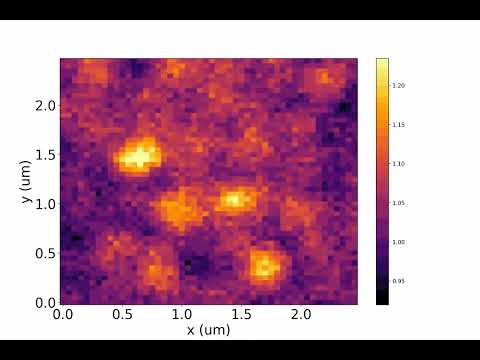
Because the flickering isn’t in sync, your eyes perceive it as a steady glow. To confirm that what they observed was not merely a microscope artifact, the team cross-referenced using a technique called superresolution optical fluctuation imaging, and is confident that what they are observing are indeed hotspots.
Why are these hotspots forming in the first place?
The researchers explained this phenomenon with a simple analogy. Think of your phone’s display as a hilly landscape. The electrons or charge carriers that power your screen naturally follow the lowest energy paths, like water flowing through valleys.
There are two types of charge carriers: electrons and positive charge carriers called “holes,” running in opposite directions. Where these rivers of charge meet, light-emitting molecules produce the photons that create your display’s glow. Because some valleys run deeper than others, they attract far more traffic, with charge densities estimated to be 10 to 100 times higher than the surrounding material.
The flickering occurs when charge carriers become temporarily trapped in dips in the energy landscape, creating a dam-like effect that reroutes the flow and causes the downstream hotspots to go dark.
Can this be fixed?
The researchers believe it can. The proposed fix is to use crystalline structures in organic displays, instead of the typical amorphous ones. Crystalline material is more uniform, creating a flatter energy landscape. It spreads charge carriers more evenly, reducing hotspots and potentially making your display last longer.


