


Close Menu
Best in TechnologyBest in Technology
  • News
  • Phones
  • Laptops
  • Gadgets
  • Gaming
  • AI
  • Tips
  • More
    • Web Stories
    • Global
    • Press Release

Subscribe to Updates

Get the latest tech news and updates directly to your inbox.

What's On
The psychology of the re-check: What Claritycheck says about digital trust

The psychology of the re-check: What Claritycheck says about digital trust

26 January 2026
Intel’s Panther Lake Chips Aren’t Just Good—They Beat Apple’s M5

Intel’s Panther Lake Chips Aren’t Just Good—They Beat Apple’s M5

26 January 2026
Joobie: Your interactive, trendy AI companion for every moment

Joobie: Your interactive, trendy AI companion for every moment

26 January 2026
Facebook X (Twitter) Instagram
Just In
  • The psychology of the re-check: What Claritycheck says about digital trust
  • Intel’s Panther Lake Chips Aren’t Just Good—They Beat Apple’s M5
  • Joobie: Your interactive, trendy AI companion for every moment
  • Next-gen lunar spacesuit redefines mobility
  • WhatsApp has begun testing a long-overdue group chat feature
  • Why Minnesota Can’t Do More to Stop ICE
  • You Asked: OLED decisions, upscaling truths, and Dolby Vision 2
  • Tesla Model 3 got outsold by an EV from a Chinese smartphone brand
Facebook X (Twitter) Instagram Pinterest Vimeo
Best in TechnologyBest in Technology
  • News
  • Phones
  • Laptops
  • Gadgets
  • Gaming
  • AI
  • Tips
  • More
    • Web Stories
    • Global
    • Press Release
Subscribe
Best in TechnologyBest in Technology
Home » How to Guarantee the Safety of Autonomous Vehicles
News

How to Guarantee the Safety of Autonomous Vehicles

News RoomBy News Room4 February 20243 Mins Read
Share Facebook Twitter Pinterest LinkedIn Tumblr Reddit Telegram Email
How to Guarantee the Safety of Autonomous Vehicles
Share
Facebook Twitter LinkedIn Pinterest Email

The original version of this story appeared in Quanta Magazine.

Driverless cars and planes are no longer the stuff of the future. In the city of San Francisco alone, two taxi companies have collectively logged 8 million miles of autonomous driving through August 2023. And more than 850,000 autonomous aerial vehicles, or drones, are registered in the United States—not counting those owned by the military.

But there are legitimate concerns about safety. For example, in a 10-month period that ended in May 2022, the National Highway Traffic Safety Administration reported nearly 400 crashes involving automobiles using some form of autonomous control. Six people died as a result of these accidents, and five were seriously injured.

The usual way of addressing this issue—sometimes called “testing by exhaustion”—involves testing these systems until you’re satisfied they’re safe. But you can never be sure that this process will uncover all potential flaws. “People carry out tests until they’ve exhausted their resources and patience,” said Sayan Mitra, a computer scientist at the University of Illinois, Urbana-Champaign. Testing alone, however, cannot provide guarantees.

Mitra and his colleagues can. His team has managed to prove the safety of lane-tracking capabilities for cars and landing systems for autonomous aircraft. Their strategy is now being used to help land drones on aircraft carriers, and Boeing plans to test it on an experimental aircraft this year. “Their method of providing end-to-end safety guarantees is very important,” said Corina Pasareanu, a research scientist at Carnegie Mellon University and NASA’s Ames Research Center.

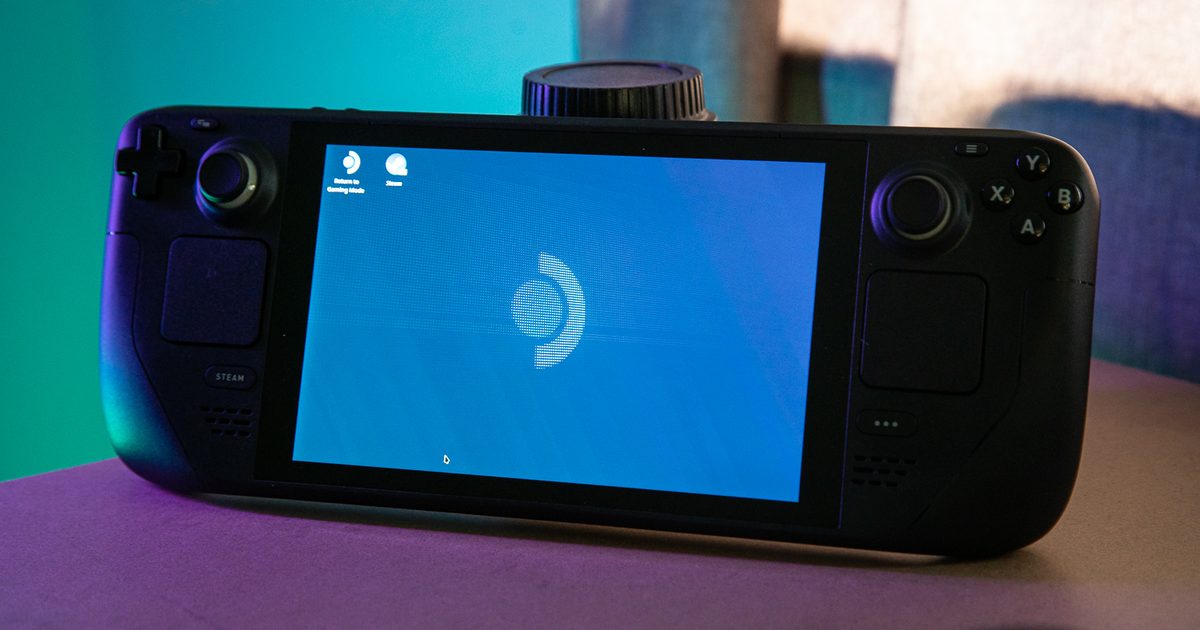
Their work involves guaranteeing the results of the machine-learning algorithms that are used to inform autonomous vehicles. At a high level, many autonomous vehicles have two components: a perceptual system and a control system. The perception system tells you, for instance, how far your car is from the center of the lane, or what direction a plane is heading in and what its angle is with respect to the horizon. The system operates by feeding raw data from cameras and other sensory tools to machine-learning algorithms based on neural networks, which re-create the environment outside the vehicle.

These assessments are then sent to a separate system, the control module, which decides what to do. If there’s an upcoming obstacle, for instance, it decides whether to apply the brakes or steer around it. According to Luca Carlone, an associate professor at the Massachusetts Institute of Technology, while the control module relies on well-established technology, “it is making decisions based on the perception results, and there’s no guarantee that those results are correct.”

To provide a safety guarantee, Mitra’s team worked on ensuring the reliability of the vehicle’s perception system. They first assumed that it’s possible to guarantee safety when a perfect rendering of the outside world is available. They then determined how much error the perception system introduces into its re-creation of the vehicle’s surroundings.

The key to this strategy is to quantify the uncertainties involved, known as the error band—or the “known unknowns,” as Mitra put it. That calculation comes from what he and his team call a perception contract. In software engineering, a contract is a commitment that, for a given input to a computer program, the output will fall within a specified range. Figuring out this range isn’t easy. How accurate are the car’s sensors? How much fog, rain, or solar glare can a drone tolerate? But if you can keep the vehicle within a specified range of uncertainty, and if the determination of that range is sufficiently accurate, Mitra’s team proved that you can ensure its safety.

Share. Facebook Twitter Pinterest LinkedIn Tumblr Email
Previous ArticleI hate low-profile keyboards, but Asus’ latest has converted me
Next Article How to watch Axiom-3 depart from the ISS on Monday

Related Articles

The psychology of the re-check: What Claritycheck says about digital trust
News

The psychology of the re-check: What Claritycheck says about digital trust

26 January 2026
Intel’s Panther Lake Chips Aren’t Just Good—They Beat Apple’s M5
News

Intel’s Panther Lake Chips Aren’t Just Good—They Beat Apple’s M5

26 January 2026
Joobie: Your interactive, trendy AI companion for every moment
News

Joobie: Your interactive, trendy AI companion for every moment

26 January 2026
Next-gen lunar spacesuit redefines mobility
News

Next-gen lunar spacesuit redefines mobility

26 January 2026
WhatsApp has begun testing a long-overdue group chat feature
News

WhatsApp has begun testing a long-overdue group chat feature

25 January 2026
Why Minnesota Can’t Do More to Stop ICE
News

Why Minnesota Can’t Do More to Stop ICE

25 January 2026
Demo
Top Articles
ChatGPT o1 vs. o1-mini vs. 4o: Which should you use?

ChatGPT o1 vs. o1-mini vs. 4o: Which should you use?

15 December 2024107 Views
5 laptops to buy instead of the M4 MacBook Pro

5 laptops to buy instead of the M4 MacBook Pro

17 November 2024101 Views
Costco partners with Electric Era to bring back EV charging in the U.S.

Costco partners with Electric Era to bring back EV charging in the U.S.

28 October 202497 Views

Subscribe to Updates

Get the latest tech news and updates directly to your inbox.

Latest News
Why Minnesota Can’t Do More to Stop ICE News

Why Minnesota Can’t Do More to Stop ICE

News Room25 January 2026
You Asked: OLED decisions, upscaling truths, and Dolby Vision 2 News

You Asked: OLED decisions, upscaling truths, and Dolby Vision 2

News Room25 January 2026
Tesla Model 3 got outsold by an EV from a Chinese smartphone brand News

Tesla Model 3 got outsold by an EV from a Chinese smartphone brand

News Room25 January 2026
Most Popular
The Spectacular Burnout of a Solar Panel Salesman

The Spectacular Burnout of a Solar Panel Salesman

13 January 2025136 Views
ChatGPT o1 vs. o1-mini vs. 4o: Which should you use?

ChatGPT o1 vs. o1-mini vs. 4o: Which should you use?

15 December 2024107 Views
5 laptops to buy instead of the M4 MacBook Pro

5 laptops to buy instead of the M4 MacBook Pro

17 November 2024101 Views
Our Picks
Next-gen lunar spacesuit redefines mobility

Next-gen lunar spacesuit redefines mobility

26 January 2026
WhatsApp has begun testing a long-overdue group chat feature

WhatsApp has begun testing a long-overdue group chat feature

25 January 2026
Why Minnesota Can’t Do More to Stop ICE

Why Minnesota Can’t Do More to Stop ICE

25 January 2026

Subscribe to Updates

Get the latest tech news and updates directly to your inbox.

Facebook X (Twitter) Instagram Pinterest
  • Privacy Policy
  • Terms of use
  • Advertise
  • Contact Us
© 2026 Best in Technology. All Rights Reserved.

Type above and press Enter to search. Press Esc to cancel.