AI-assisted tools are compressing the time between idea and launch, which means the competitive advantage is moving away from raw execution and toward product judgment, visual identity, and built-in social behavior.
In the modern landscape, when a consumer product gets hundreds of thousands of people in a matter of weeks, the result is usually chalked up to luck or simply good timing. These are subtle ways in which others will dismiss the success of the product as a fluke; clearly not something that was orchestrated, but rather something that just so happened to be in the right place at the right time. The story comes down to a timely idea, a well-placed and well-phrased post, or an algorithm that cooperated, with the builder put in the role of a fortunate passenger and little more.
However, AI tools are equipping founders with not only the ability to work that much more quickly and effectively, but also to prognosticate their new products’ relative success more succinctly. As a result, these tools are helping to prove that true success in the modern landscape is much more than some sort of happy accident; it is the result of tireless work and precise planning.
The Tale of GitCity
A strong example of how essential planning is to the success of modern launches and how AI-assisted tools have allowed developers to keep pace with consumers in an innovative fashion is GitCity.
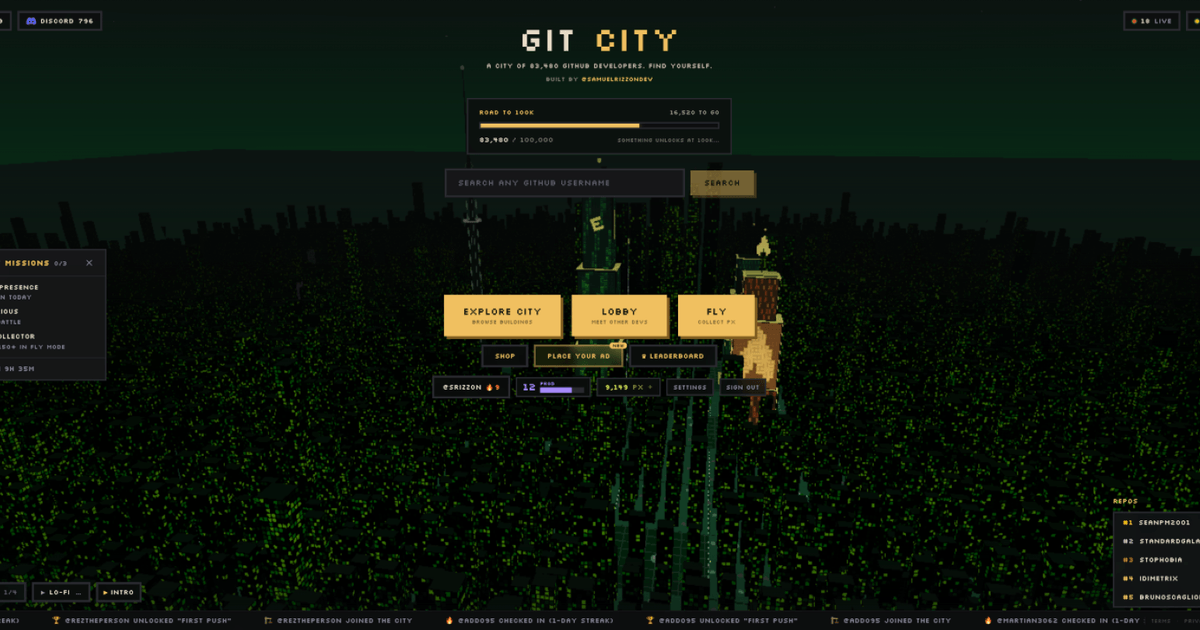
GitCity is a browsable 3D city assembled from the profiles of GitHub developers, created by Samuel Rizzon, a 29-year-old Brazilian engineer. He claims that he “built the platform in a single day with Claude Code and designed it from the first hour to become viral, even when no one was using it.” This framework paid off, as, according to Rizzon, since its inception, GitCity has drawn approximately 150,000 visitors and generated around five million social impressions within its first two months.
Digital Interactivity and Personalization
One of the primary inspirations behind a project like GitCity was meeting the demands of modern consumers. In an age when the internet is more prolific and ever-present than before in the lives of the vast majority of consumers, many are looking for a more personalized, active way to engage with it. In the age of social media and endless scrolls, it is far too easy to become a passive viewer of your own internet usage, simply acquiescing to what the algorithms are pushing into your view. However, by seeking out more personalized online spaces that offer unique and interactive experiences, consumers can retain greater autonomy online, resulting in higher satisfaction.
GitCity offers users this ability in spades, as they navigate a digital city on their own terms in a free-roaming virtual space, rather than being endlessly shuffled from one post to the next in linear succession. From the outset, Rizzon knew that this had potential for virality, and so in building the product, he sought to prepare for widespread accessibility and personalization. “On the first day, when I had the idea of creating the city, I noticed that this could be a viral product. So I prepared and made everything to go viral,” he says.
Branding as the First Conversion Funnel
Open GitCity and the first thing that happens is a cinematic camera move that flies into the skyline before the user can interact with anything. The effect produces a reaction by default, and it is intentional. He wanted the strongest possible impression at the moment a newcomer arrives, then let them explore from there. The pixel-art style serves the same end: distinctive enough to be recognized in a screenshot but also easy to interact with on a small phone screen, a huge asset for a product with most of its traffic coming through social media.
For him, he explains, “the most important thing was branding and the UI of the city: the visuals, the look of the city. I really care about that, and I think that’s why people like it.” Rizzon credits a sense of taste he struggles to define, but the working method behind it is concrete: he iterates on the visuals until they clear his own bar, then trusts that standard as a proxy for what users will respond to. This approach reflects a pattern seen across several of his earlier projects. According to Rizzon, a Bible quiz app he published in 2015 reached approximately 22,000 downloads, while a Google Meet extension he launched in 2020, which allowed users to mute an entire call with a single click in response to complaints teachers were voicing on social media, grew to around 150,000 users before being acquired by the founder of MP3.com.
Shortening the Distance to the Share
The mechanic Rizzon leans on hardest in GitCity is also the most ordinary one. Every meaningful action a user takes comes paired with a single-click button to post it to X. He added it after watching people screenshot their buildings and share them by hand, then removed the small gap between that impulse and the post.
“Every action that you do in the city, I added a ‘share on X’ button. When you attack someone, you can share on X with one click and then another click to publish. People are just sharing and sharing,” Rizzon says. The effect is a product where ordinary engagement means distribution by default, and one that doesn’t halt the experience to ask the user to promote it.
He runs the same principle in reverse through email. A feature lets one building attack another, and the target receives a message that lays out what happened. That notification pulls the person back into the city, where they often retaliate, so they can share the updates and set the cycle going again. Action, notification, retaliation, share: that loop is what turned GitCity from a static directory of developers into a place people keep returning to. The lesson Rizzon draws from these experiences is the same: find the moment a user would most likely mention or bring up a product, then shorten the distance between that moment and the share until almost nothing stands in the way.
How AI Tools Have Altered Product Development Moving Forward
A solo developer can now assemble and launch a consumer product at a pace that was reserved for funded teams only a few years ago.
This stretches well beyond GitCity, and is instead indicative of the wider ramifications of these AI tools and their role in product development. When a working product can move from idea to live in hours, timing turns into something a builder controls, and a launch can be aimed at a news cycle, a trending post, or a platform moment instead of being left to chance. The shift, nonetheless, doesn’t have to diminish the value of taste; rather, it raises it, since this technology means that shipping fast no longer sets anyone apart on its own. Rizzon says he works this way on purpose, releasing multiple projects in a short span of time and continuing with the one that breaks out the most.
Digital Trends partners with external contributors. All contributor content is reviewed by the Digital Trends editorial staff.