




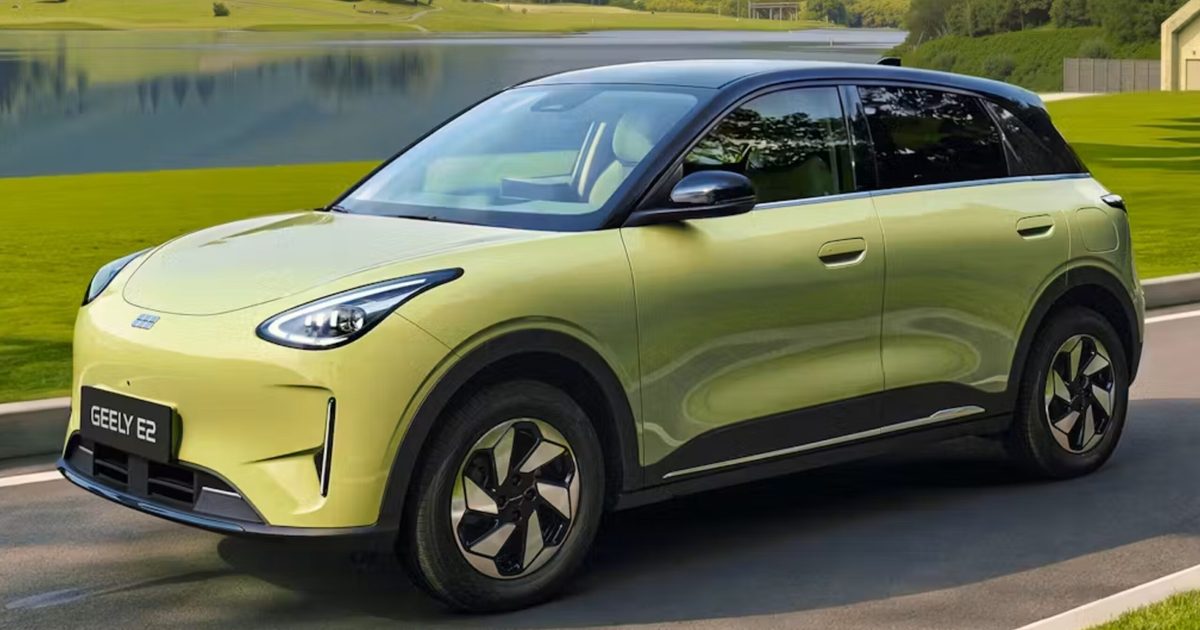
This is not the first time I’ve watched European or Chinese car shoppers, for that matter, get a chance to buy genuinely affordable EVs. Meanwhile, American buyers keep hearing and talking about higher starting prices and fewer features on the entry-level trim.
Geely’s new compact electric hatchback costs 19,490 EUR in Belgium, or roughly $22,490, and is yet another example of the same. While the entry price is only available for a limited time, I’m talking about the overall package the automaker is offering.
So what exactly did Geely launch?
This Geely E2 is sold in China as the Geely Xingyuan, and for those catching up, it was the country’s best-selling car in all of 2025. After moving 465,000 units that year, it’s already leading sales again through the first half of 2026.
And while you already know the price, you deserve to know what all the Geely E2 offers in Europe. The list includes a 35 kWh battery pack on the base Pro trim, which provides a claimed WLTP range of 156 miles. Buyers also get seven airbags, a 14.6-inch infotainment screen, a 375-liter trunk, and a 70-liter frunk.
There’s a bigger 47 kWh battery pack as well, which stretches the claimed range up to 214 miles. As seen in the pictures, the EV carries a minimal yet functional look, with sleek headlights up front, regular door handles and stylized rims on the side, and a simple rear profile with only the useful elements in place.

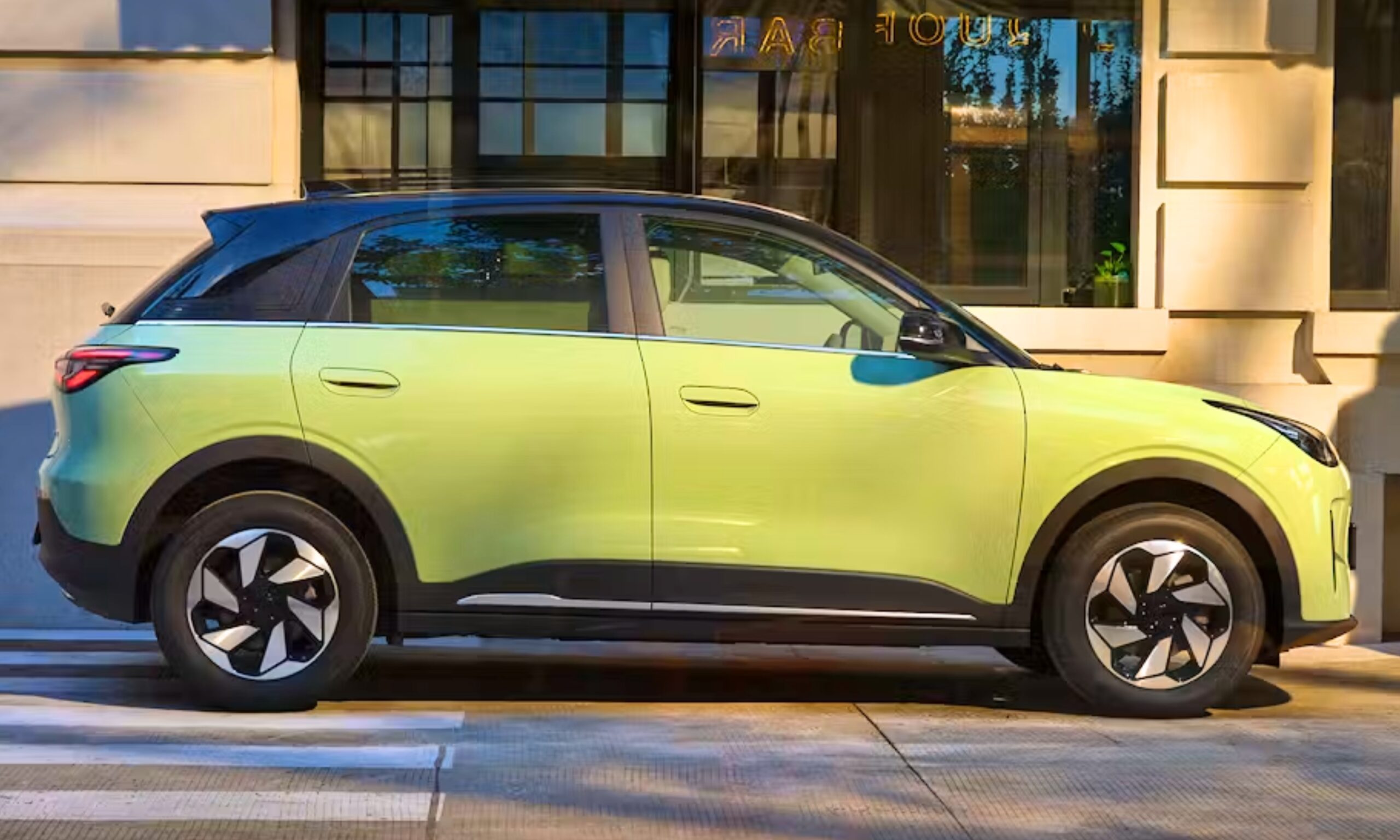
Inside, it has enough space to comfortably seat four people. You could drive it to your office or drop off your kids at college, while saving thousands of dollars that otherwise go into getting a more expensive everyday EV. However, Geely has no plans to launch the E2 in the US.
Meanwhile, what does $22,000 actually buy you in America?
Nothing that even comes close. America’s cheapest EV right now is the revived Chevrolet Bolt at $28,995, followed by the Nissan Leaf around $31,535 and the Hyundai Kona Electric at $34,470. Even Tesla’s most affordable EV, the Model 3 (RWD), costs $36,990, while the actual take-home cost is slightly higher.


The lone outlier is Slate, the Bezos-backed startup that sells a bare-bones electric pickup for $24,950. It’s cheap, no doubt about that. But I can’t recommend it to everyone because it strips out nearly every feature you’d expect to be standard on a car in 2026, including power windows, powered seats, a factory paint job, or a center console, for that matter (Forget the center infotainment screen).
You see? The sub-$25,000 EV market in the US is essentially an empty showroom with no mass models or cars whatsoever, while other markets like China, due to growing competition among automakers, are flooding the segment with feature-packed models.
Weren’t Ford and Volkswagen working on affordable EVs?
It’s not like all automakers in the US are ignoring the gap entirely. Ford is working on prototypes of a $30,000 midsize EV pickup, based on its new Universal EV Platform. The company is using megacasting and domestically made LFP batteries to hit that price, though the car might not arrive until next year.


Similarly, Volkswagen’s sub-$27,000 ID.2 hatchback has been stuck since 2023, though the company is still aiming for production in 2026. You see? Both automakers want a slice of the affordable EV market, but nobody actually has a model that’s ready to hit the road.
I also covered the IEA’s Global EV Outlook 2026 report in June, which highlighted how EV adoption is ramping up everywhere across the world, courtesy of falling prices, but in the US.
In fact, recent policy changes, such as the elimination of tax credits and the 100% import duties on Chinese EVs, keep Americans from buying affordable, everyday-use EVs that save the gasoline bill while being easy on the environment. You’ve to keep paying a premium that European and Chinese buyers aren’t paying anymore.