

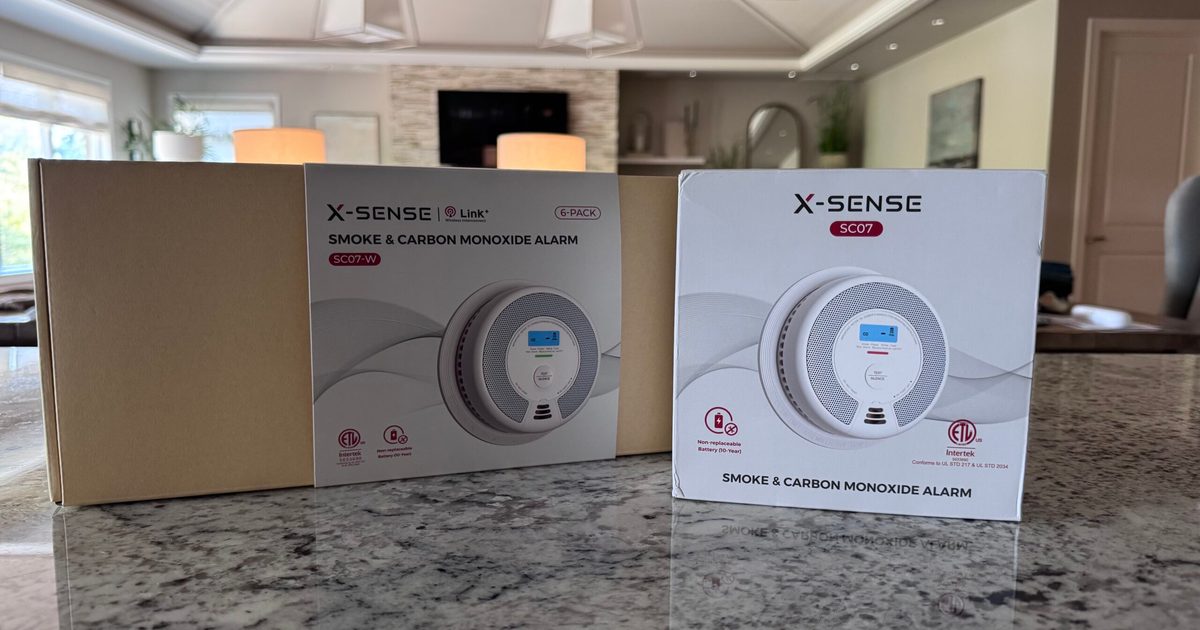



X-Sense SC07
MSRP $37.00
Released January 2026
“Genuine life-safety certification and a live CO readout at an amazing value”
Pros
- Costs a third of the competition
- LCD gives you a live CO number in PPM rather than a beep pattern to decode
- Sealed 10-year battery means zero 3 a.m. chirps
Cons
- Photoelectric only, with no ionization or dual-sensor backup
- Only a five-year warranty
Quick Summary
In my near 50 years of age, there is a humorous topic that often comes up in conversations: that one time when the smoke alarm battery ran out at 3:00 am and woke someone up with a chirp, and then you had to run around the house trying to figure out which smoke alarm has the dead battery. Smoke and carbon monoxide alarms are the one category that I feel no brand can really get right. They are either way overengineered or too cheap to offer any cool features at all. Remember Google’s Nest Protect? Killed. First Alert has their $130 SC5, which had voice alerts, phone notifications, and an app. And in the meantime, standards for smoke alarms have been changing in addition to the technology itself.
UL 217, the smoke alarm standard, added a cooking-nuisance immunity test in its 9th edition, and NFPA 72 (2025), effective January 1, 2025 in jurisdictions that adopted it, requires the 8th-edition-or-later listing for alarms mounted within 20 feet of a cooking appliance. For context, the alarm outside your kitchen now must be able to tell burnt toast from an actual house fire, because the alarm you rip off the ceiling in frustration is the alarm that isn’t working next year.
The SC07 (and SC07-W interconnected pack) costs $36.99 for the single unit and $269 for the 6-pack interconnected version, and gives you photoelectric smoke sensor, and electrochemical CO sensor, and sealed lithium battery rated for a decade and a backlit LCD that reads out the actual carbon monoxide concentration in parts per million instead of making you guess it from a chirp pattern (if you can read the LCD on a 10FT tall ceiling). There’s no app, no hub, no subscription, and no Wi-Fi that can go stale in four years.
Where the SC07 really stands out is in the price and fundamentals department for me. On the flip side, where the SC07 could fall apart for some people is in the connection department because this is a standalone model. But there is good news. The SC07-W can be purchased in a larger 5-pack, and that version is interconnected with each other. So get the SC07 for a single room if that’s all that matters to you, and get the W version if you’re looking to replace all of the alarms in your home.
X-Sense SC07 specifications:
| Dimensions | 5 inches wide x 2 inches deep (mounting bracket 5.7 inches across) |
| Smoke sensor | Photoelectric |
| CO sensor | Electrochemical |
| Smoke sensitivity | 0.97-1.79% obscuration per foot |
| CO alarm thresholds | 70 PPM (60-240 min.), 150 PPM (10-50 min.), 400 PPM (4-15 min.) |
| CO display range | 30-999 PPM |
| Alarm volume | ≥85 dB at 9.84 feet, 3.2 ± 0.3 kHz pulsing |
| Silence period | Up to 9 min. (smoke), up to 6 min. (CO) |
| Power | Sealed 3V lithium battery, non-replaceable |
| Standby current | <6 µA average |
| Product life | Approx. 10 years from activation |
| Operating temperature | 40-100°F |
| Operating humidity | ≤85% RH, non-condensing |
| Certifications | ETL listed, conforms to UL 217 and UL 2034; CE, FCC, RoHS (X-Sense publishes no edition numbers – see Certification) |
| Interconnect | None |
| Warranty | 5 years per X-Sense’s own policy (see Durability and Warranty) |
| Price | $42.99 MSRP, $36.99 street |
Design: Basic looking white puck with an LCD display
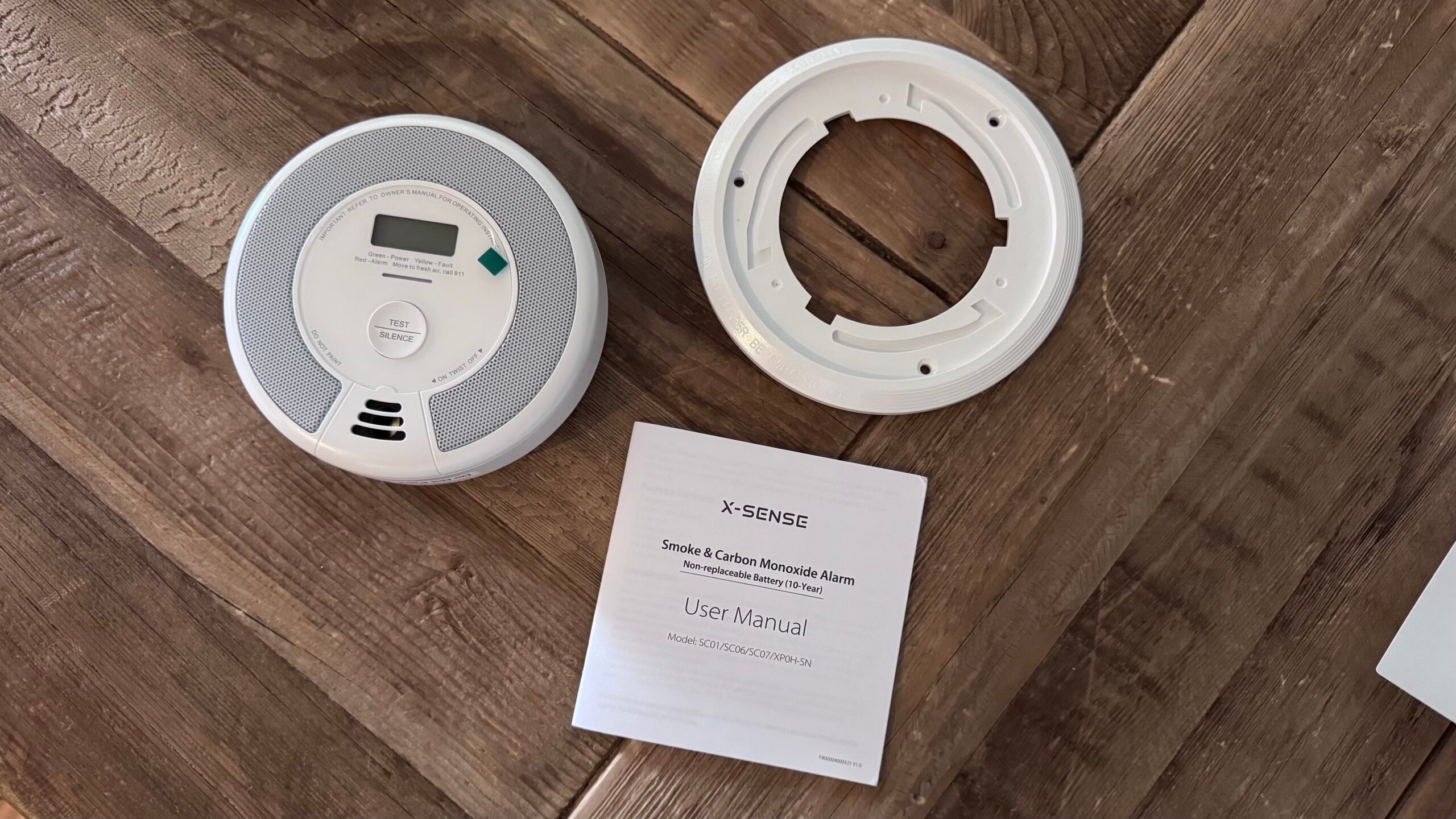
One thing that has not changed over the years is the way smoke alarms look. The SC07 is a five-inch white plastic disc that stands about two inches off the ceiling. For comparison, the Kidde 30CUD10 has an identical five-inch footprint and the same two-inch depth, and it’s a heavier unit. Combination alarms are all bigger than the smoke-only alarms because there are two sensors in there. Add to the size a 10-year non-replaceable battery inside of it.
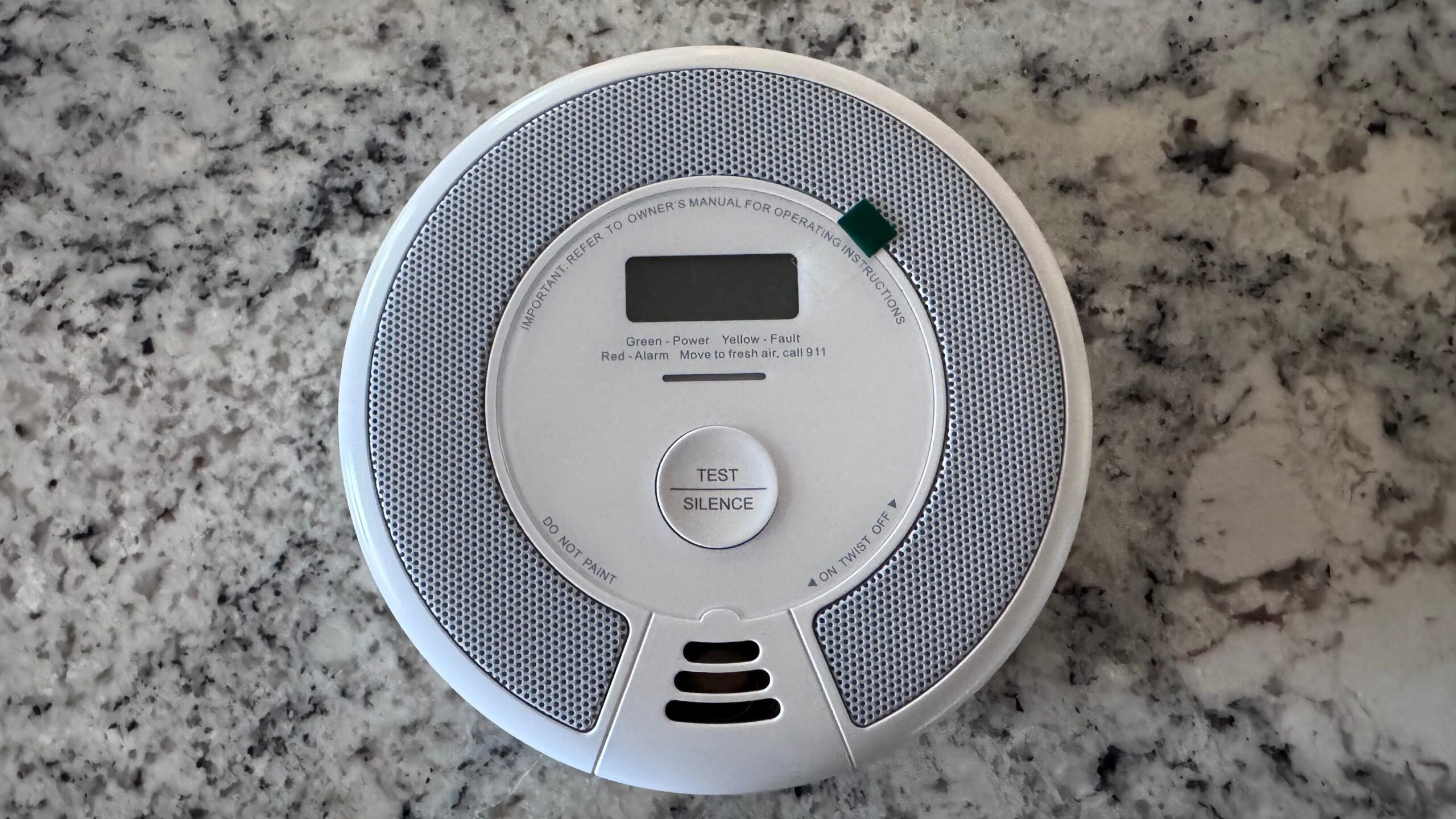
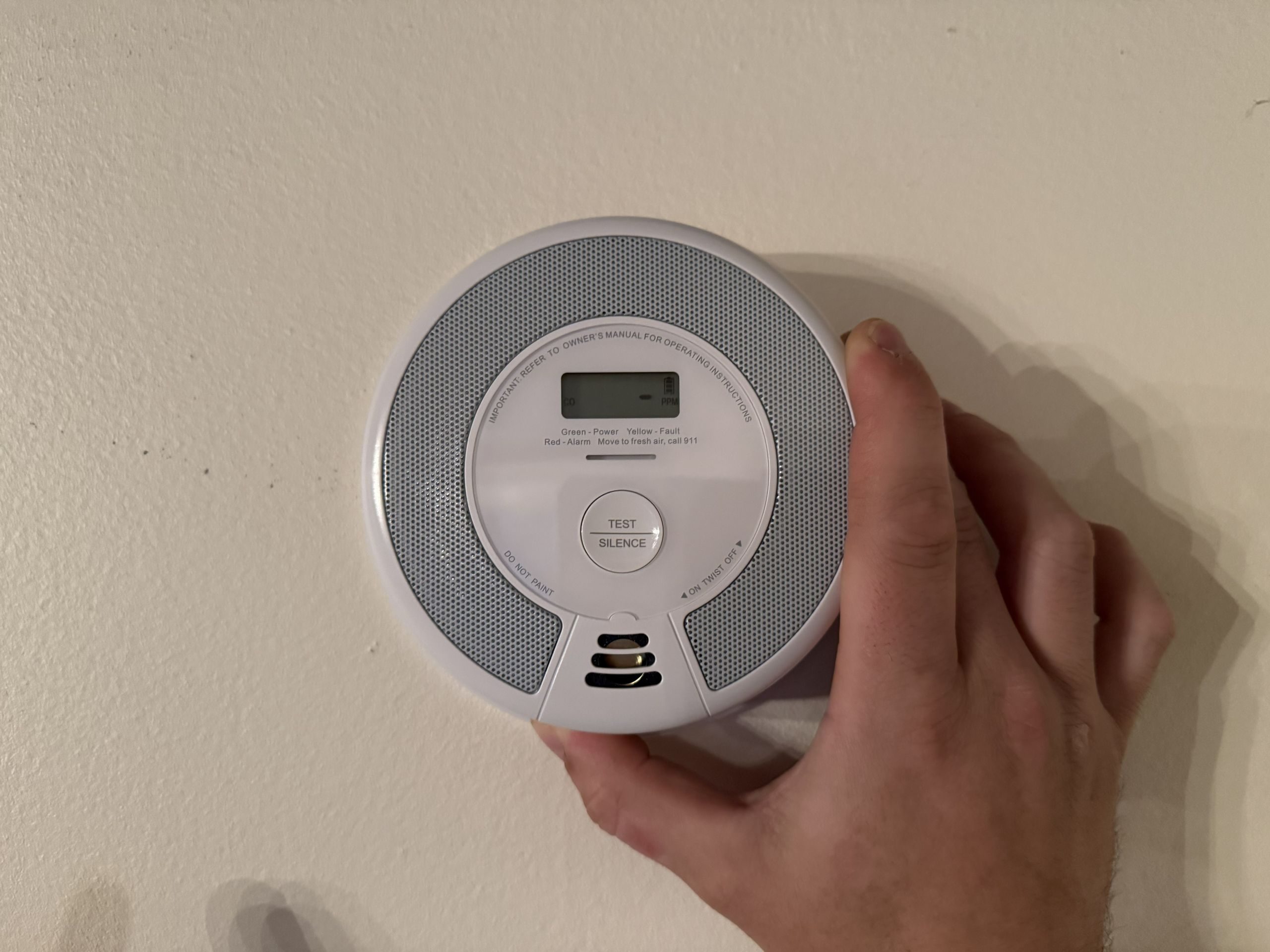
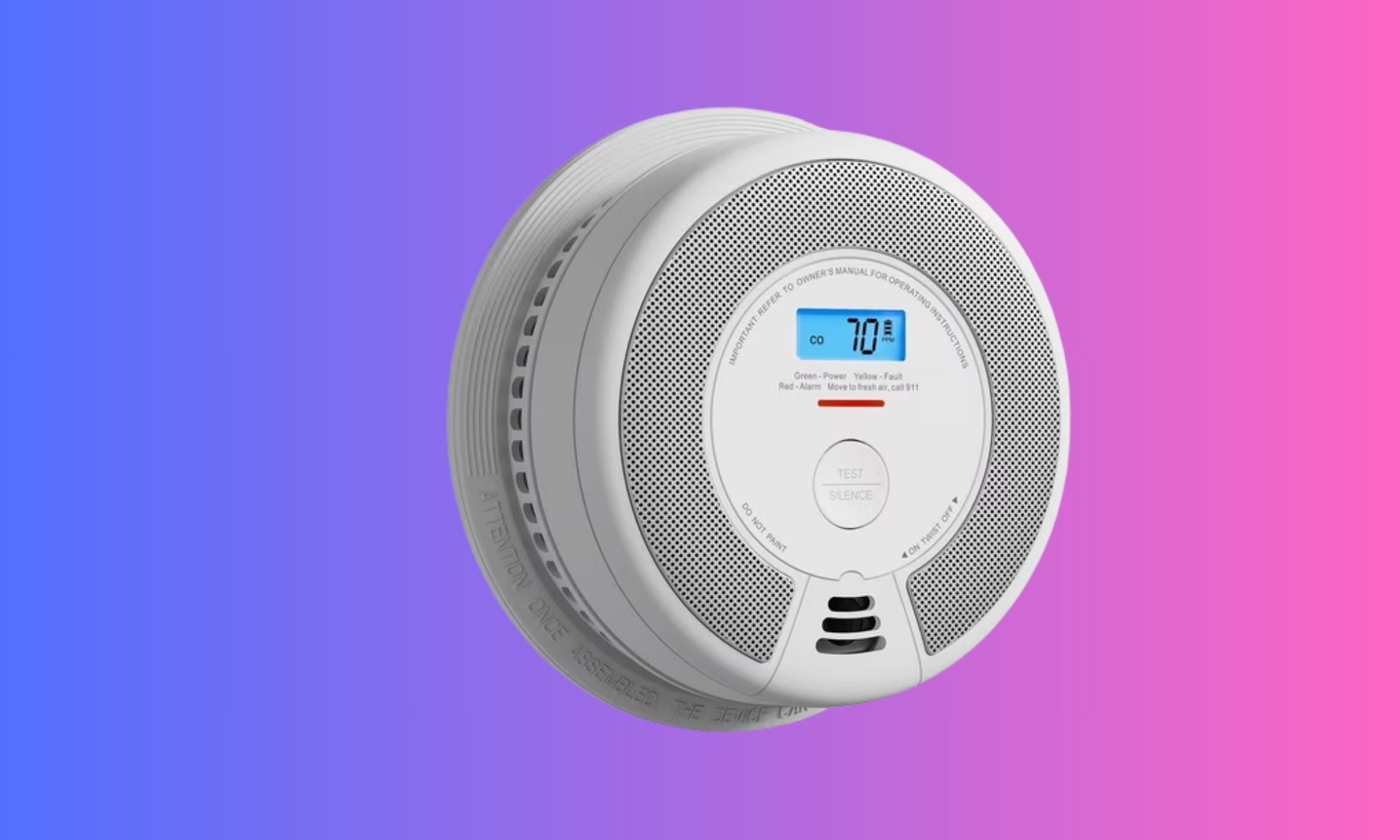
The thing that separates this alarm from others is the display, and at $37, I think it’s the best deal out there. Instead of the typical industry standard approach – one LED and beep codes that you have to look up in the manual you wish you kept – the SC07 puts a backlit LCD on the face showing live CO concentration in parts per million, the battery status, and the end-of-life state. Tap the single button and the alarm wakes up. Super simple. Like other CO alarms, the threshold is 70 PPM or higher that will set the alarm off. I liked that I could look at the display and understand just how much CO concentration is in the room.
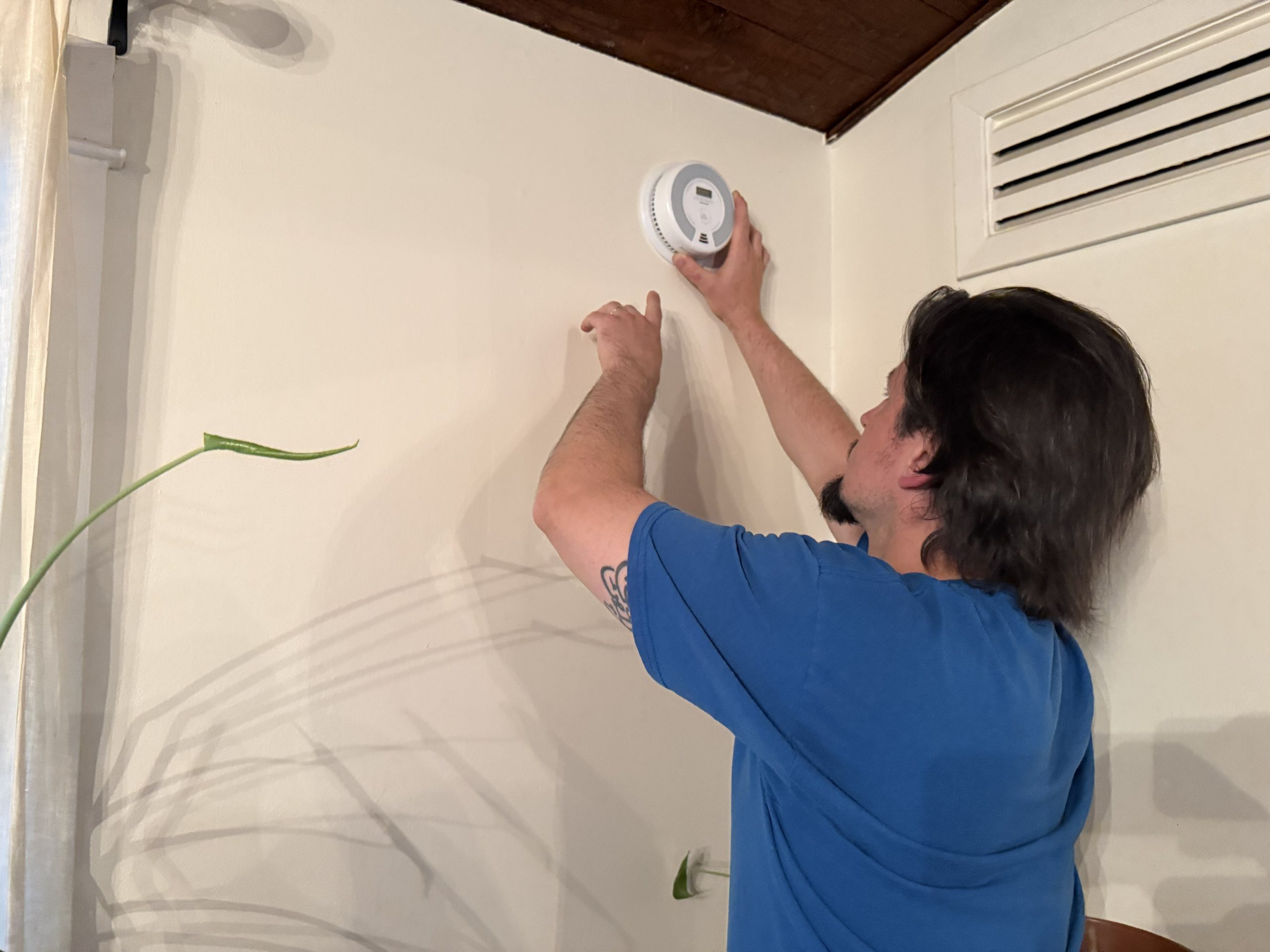
X-Sense also ships an oversized 5.7-inch mounting bracket which exists purely to hide the discolored ring left by whatever alarm was there before. I know it’s not a big deal, but it makes installing over an older alarm very easy to do, and I thought it was very thoughtful.
Detection: Photoelectric only, worth the trade-off?
The SC07 uses a photoelectric smoke sensor, which works by shining a light beam into a chamber and watching for smoke particles to scatter it. Photoelectric sensing is considerably better at catching large, slow smoke particles you might get from an electrical fire, a cigarette that was dropped, a battery fire, or cooking, for example. Those are the types of fires that produce the most residential fires because they fill the house with CO while everyone sleeps.
The advantage of a photoelectric alarm is that it can tell if you have a real fire or just burnt toast – it’s recommended that you do not put ionization alarms near the kitchen, for example, as they can be too sensitive. It’s worth noting that the US Fire Administration recommends having an alarm that supports both photoelectric and ionization sensors, but ionization alarms are being phased out in both commercial and residential markets. The main driver of this phase-out is the new Underwriters Laboratories (UL) standards (UL 217 9th Edition and UL 268 7th Edition), which took place in June of 2024.
These updated codes help make sure that smoke alarms can distinguish between an actual fire and everyday cooking, and alarms need to be able to respond quickly to smoldering and burning polyurethane foam, which is very common in mattresses and furniture. If you visit major retailers like Home Depot, you will notice that they are mostly carrying compliant photoelectric models like the Kiddie Detect Line these days.
Installation and living with the SC07: Twist, lock, then check back in a decade
The nice thing about the X-sense SC07 is that there is no hardwiring, no app pairing, and no account registration required. In the box, you get the alarm, the bracket, screws, wall anchors, a manual, and the CO safety stickers. You screw the bracket to the ceiling, twist the alarm on (twisting flips the switch on the back to the on position), and the battery activates. The single button on the front handles everything: one tap to wake the display, a long press runs the self-test just like every other alarm, and a press during an alarm silences it for up to nine minutes for smoke or six for CO.
The alarm runs an automatic self-check and flashes its LED green once a minute to tell you it’s alive. Yellow means a fault, while red means you should also be moving out of the house. For my very simple – and safe tests, I use an incense candle near the SC07, some smoldering napkins near it, and the puff of smoke from the candle and the smoke from the napkins set it off pretty quickly, and we are talking about a small amount of smoke.
Alarm and Alerts: 85 decibels should be loud enough
The SC07 makes a pulsing 3.2 kHz tone that X-sense rates at 85 dB measured at 9.84 feet, which is the same number every residential combination alarm in America quotes, because that’s the standard. I did not use a sound level meter to test the decibels but confirmed that it sounded just as loud as the Kiddie smoke alarms I have in the house. On the downside, there’s no voice announcement telling you whether it’s smoke or CO, no strobe, and no 520 Hz low-frequency square-wave option.
If you decide to buy the six-pack SC07-W, which has the alarms all interconnected, you will be alerted to a CO or smoke alarm even if the issue is in a faraway room. The single SC07 does not have that feature. If you opt for the true smart home-enabled SC07-WX with smartphone app, you can check all your units, including the CO level, and be notified via your phone if there is an issue – great for when you are traveling.
Durability and Warranty:
Physically, there isn’t much here to fail. The housing is heat-resistant polycarbonate. There are no hinges, and the sealed battery removes the battery drawer that breaks on cheap alarms, which leaves the twist-lock bracket and the single button as the only mechanical parts in the whole product.
At roughly 10 years from activation, the unit announces itself on the LCD and chirps, and a switch on the base permanently kills the alarm so it can’t chirp in a landfill. There is no upgradability, and there shouldn’t be – electrochemical CO sensors drift, and photoelectric chambers accumulate dust, which is why every alarm sold in this country now carries a hard expiration date. Ten years, then it goes in the garbage regardless of how fine it looks.
X-Sense offers a 5-year warranty, which is shorter than competitors like Kiddie on their 30CUD10 and First Alert on their SC5. Now keep in mind that both competitors I mentioned have a retail price tag that is two or three times higher than the X-Sense SC07.
Should you buy the X-Sense SC07?
Yes – for the right rooms, and with your eyes open.
If you’re replacing expired alarms in an apartment, a condo, a single-story house, or one specific bedroom, and you want properly certified dual protection without an account, a hub, or a monthly fee, the SC07 is the easiest recommendation in this category. At $36.99, it costs less than a third of the First Alert SC5 and roughly 60% of what Home Depot wants for the Kidde, and it’s the only one of the three that shows you a live CO number.
Buy several, and you’ve spent under $150 covering a whole small home with nothing to maintain for a decade, which is a lot of peace of mind for the money. Need 5 or more in your home? Go with the SC07-W interconnected model.
Where I’d tell you to spend more is anywhere the standalone limitation bites. A multi-story house genuinely needs interconnected alarms, because the point of interconnection is that a fire starting in the basement sounds every alarm on the top floor while there’s still time to use the stairs. That isn’t a bells-and-whistles feature, and if that describes your house, do not buy this model to save seven dollars a unit.
Why not try…
X-Sense SC07-W ($49.99, or $269.99 for six): The same alarm with an 820-foot RF interconnect linking up to 18 units, no Wi-Fi and no app required. It’s seven dollars more per unit and, importantly, its two CR123A cells are sealed and non-replaceable, so it clears the same 10-year battery life the base model does. If you live in anything larger than a one-floor apartment, buy this instead – it’s the version I’d put in my own house.
First Alert SC5 ($129.99): The official Nest Protect replacement, and the alarm to buy now that Google announced its exit in March 2025. It conforms to UL 217 10th edition, adds voice alerts that name the hazard and its location, wirelessly interconnects, and pushes notifications through the First Alert app. But it runs on six user-replaceable CR123A cells, which is worth checking against your state’s sealed-battery law, and it costs 3.5 times what the SC07 does.
Kidde 30CUD10 ($59.97 at Home Depot): The closest direct rival, and the safer paperwork. It’s a sealed 10-year combination alarm ETL-tested to UL 217 10th edition, with a published 10-year warranty. What you give up is the LCD, so you get status LEDs instead of a live CO reading, which for me is a genuine loss – and you pay about $23 more for the missing LCD display.
X-Sense SC07-WX ($32.99, regularly $42.99): The Wi-Fi model, with app alerts in roughly 20 seconds and multi-property support. It uses a replaceable CR123A rated for about one year, not ten, which fails the sealed-battery requirement in New York and a dozen other states and puts you back on an annual maintenance schedule. Check your local code first.